"Organic cotton" appears on an enormous number of product pages and means almost nothing on most of them. There is no global restriction on the phrase in marketing copy the way there is on food labelling, so a brand can print it next to a garment that contains a small percentage of organic fibre, or none that anyone verified.
What does mean something is certification. Here is what the main standards actually cover, what they do not, and why any of it should affect which hoodie you buy.
What organic cotton actually is
Organic cotton is grown without synthetic pesticides, synthetic fertilisers or genetically modified seed, under a certified crop management system with mandated rotation.
Conventional cotton is one of the more chemically intensive crops in agriculture. The environmental case for organic is simple: less pesticide load on the soil and the water table, and better conditions for the people doing the picking.
The part brands rarely explain is that it also produces a measurably better garment, for a reason that has nothing to do with ethics.
Why organic cotton feels different
Organic cotton is generally hand-picked rather than machine-harvested. Machine harvesting is faster but breaks fibres and pulls in leaf and stem debris, which then has to be removed with harsher mechanical and chemical processing. Hand-picking keeps fibres longer and intact.
Longer fibres mean:
- A smoother yarn surface, so less pilling at the friction points: underarms, cuffs, where a bag strap sits.
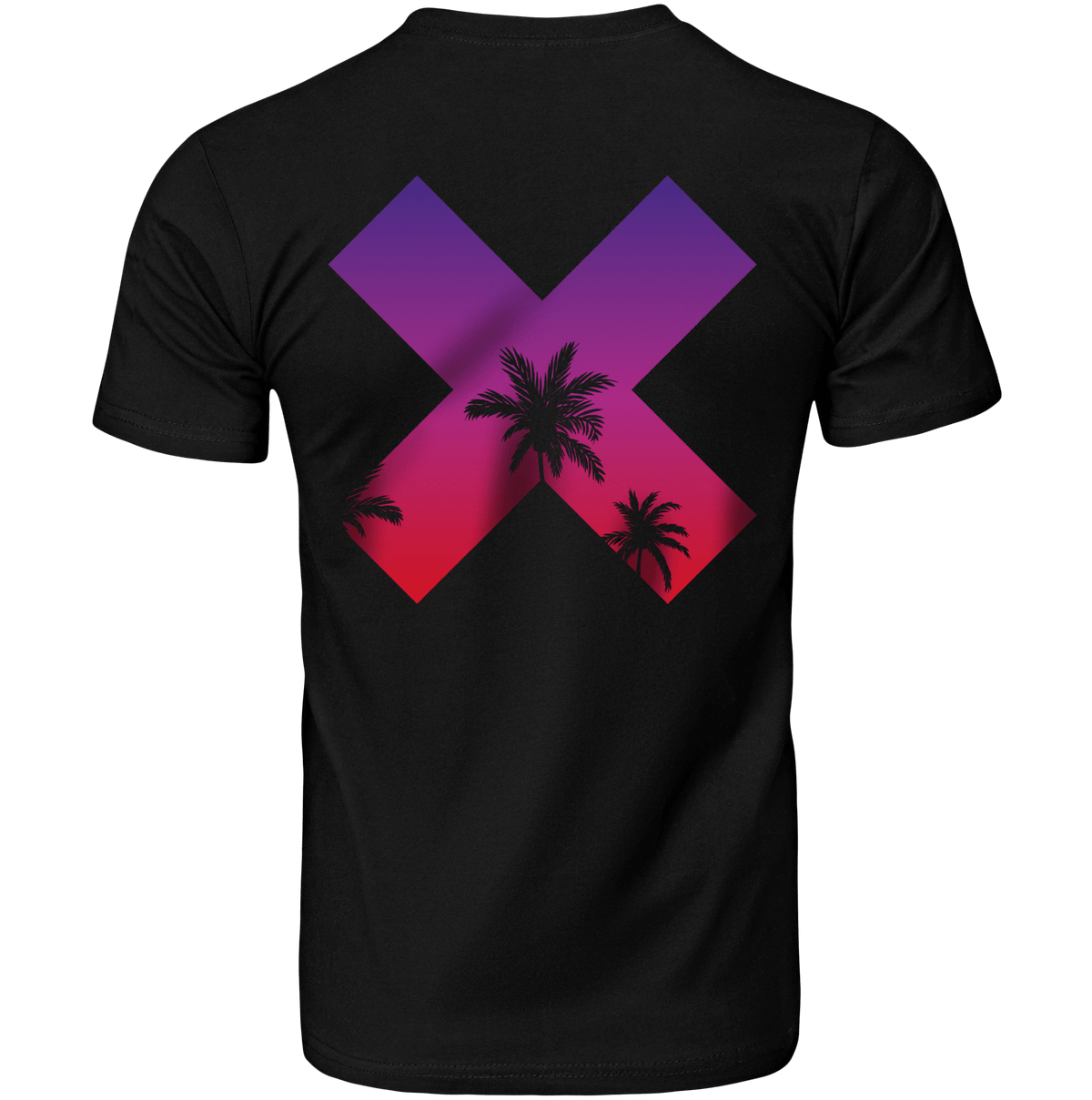
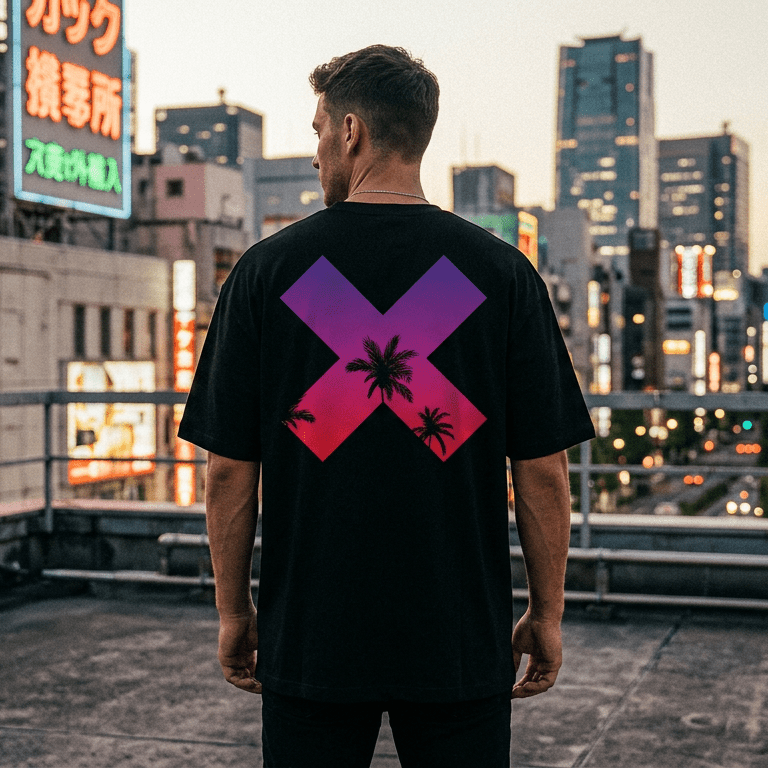
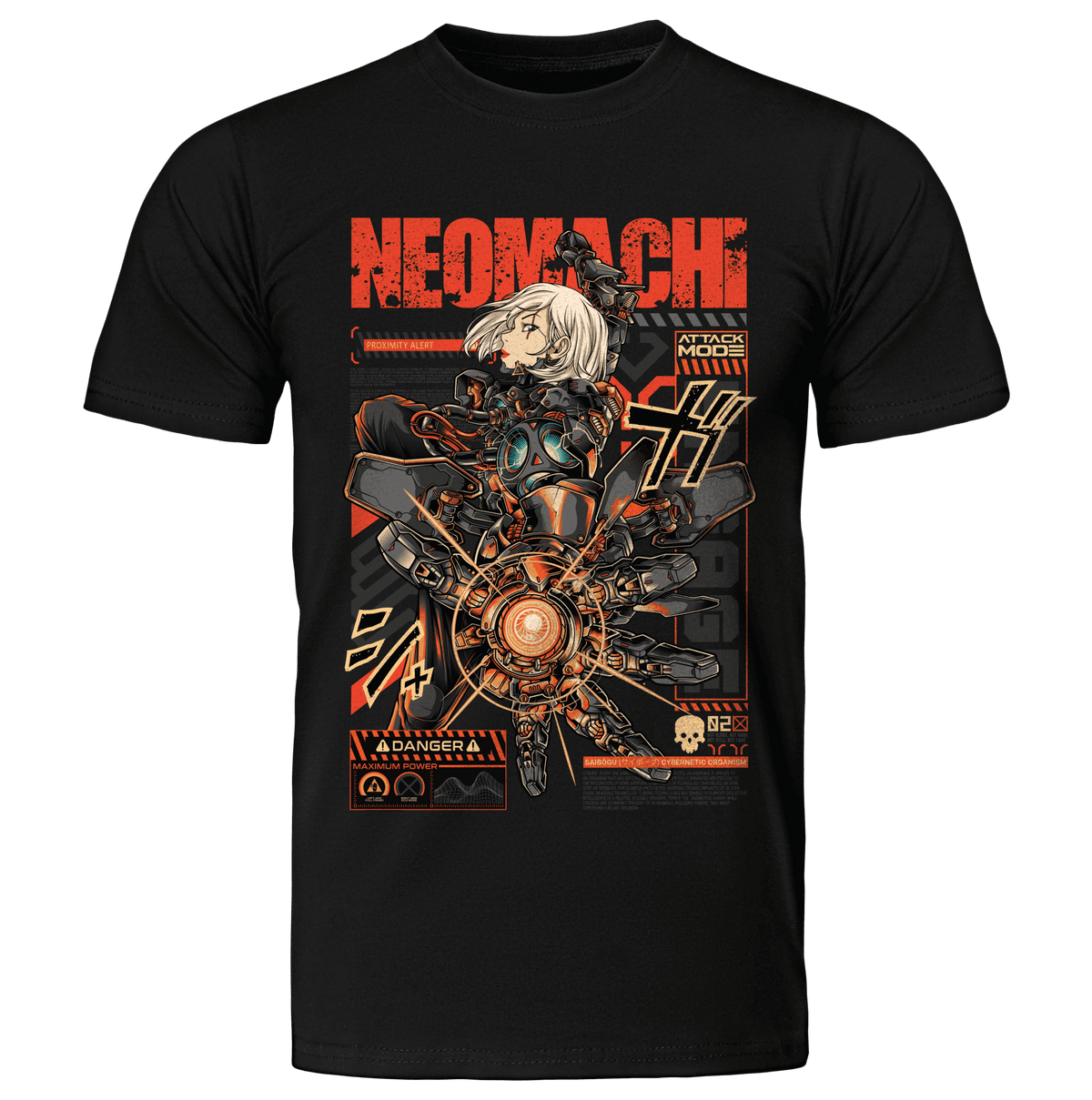
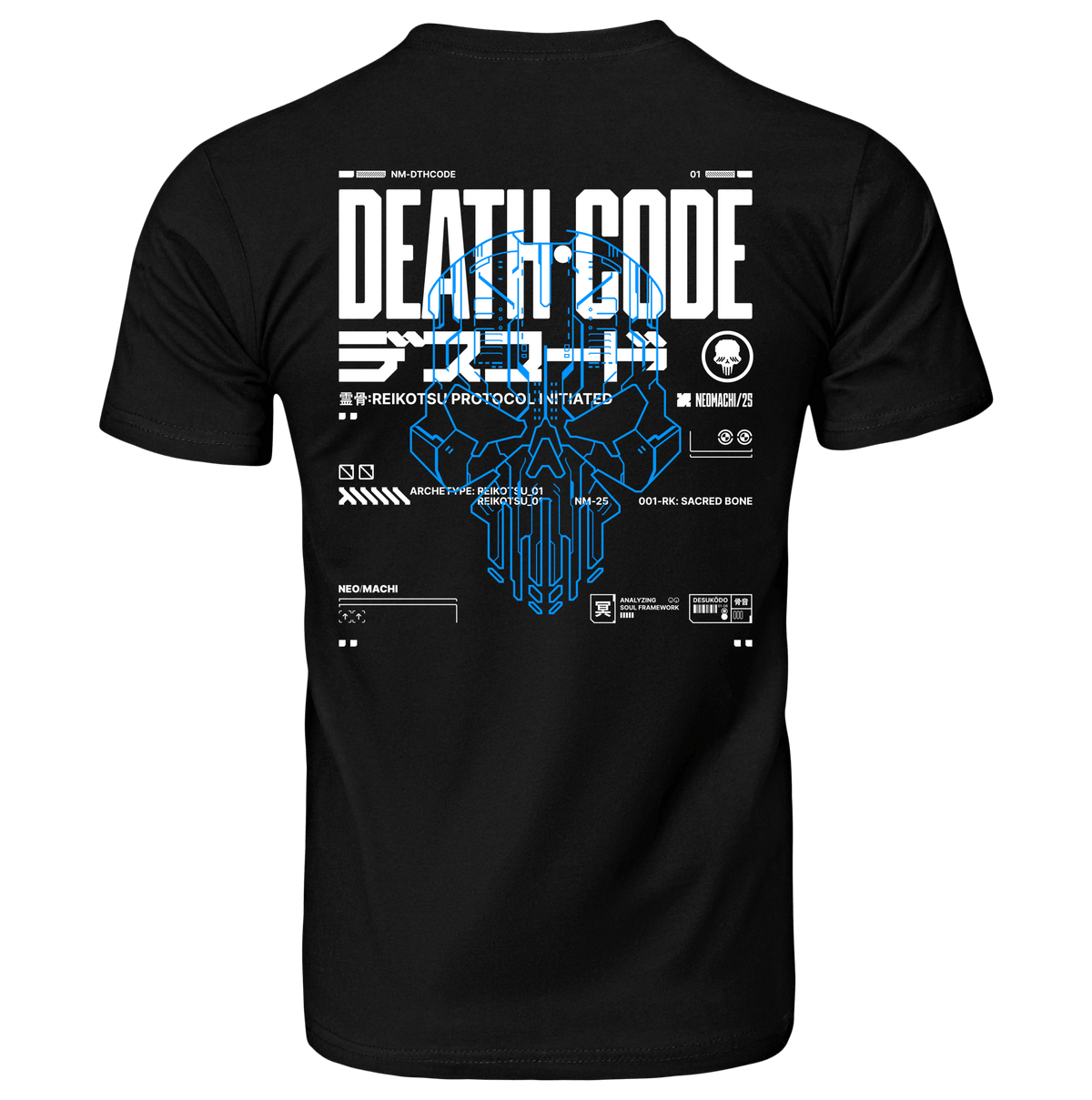
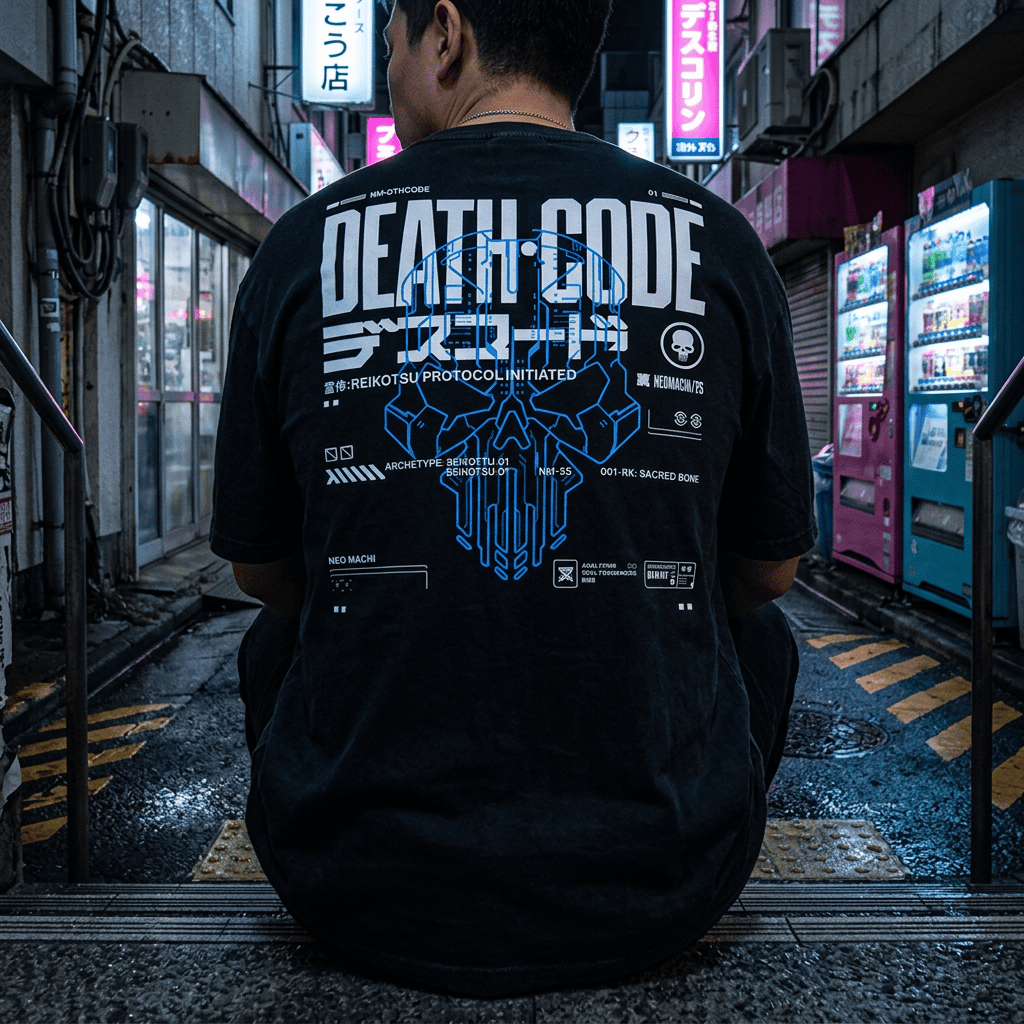
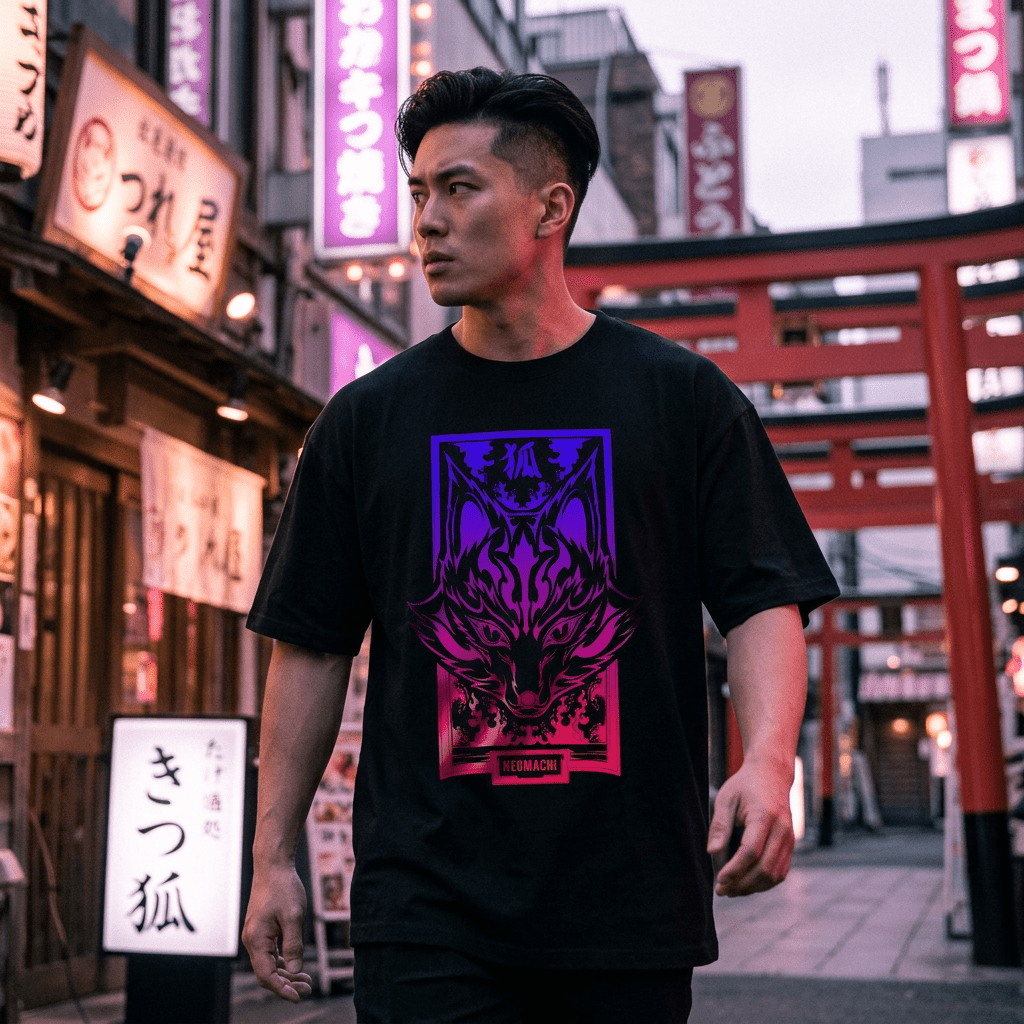
- Better print definition, because ink sits on a more uniform surface. This matters a great deal for the fine line work in cyberpunk artwork.
- Better dye uptake, so deep blacks stay deep instead of drifting grey after a dozen washes.
- Higher tensile strength, so the garment survives more wash cycles.
If you have ever wondered why one black hoodie still looks black after two years and another went chalky by spring, this is usually the answer. What else to check before you buy is in how to choose a hoodie that lasts and the cyberpunk t-shirt guide.
The certifications, decoded
GOTS: Global Organic Textile Standard
The strictest and most widely recognised. GOTS covers the whole chain, not just the field.
- Minimum 70% certified organic fibre to carry the label; 95%+ for "organic" rather than "made with organic".
- Restricts the chemistry used in dyeing, bleaching and finishing: no chlorine bleach, no formaldehyde, heavy metal limits.
- Requires wastewater treatment at wet-processing facilities.
- Includes social criteria based on ILO conventions: no forced or child labour, freedom of association, safe conditions, living wage commitments.
- Requires third-party on-site inspection at every processing stage, with chain-of-custody documentation.
That last point is what makes GOTS meaningful. Anyone can claim organic fibre; GOTS requires a documented, audited paper trail from field to finished garment.
OCS: Organic Content Standard
Verifies the amount of organic material in a product and tracks it through the supply chain. It does not cover processing chemistry, wastewater or labour conditions. Useful, but a narrower claim than GOTS.
OEKO-TEX Standard 100
Tests the finished textile for harmful substances. It says nothing about whether the fibre is organic, how it was farmed, or who made the garment. It is a safety standard, not a sustainability one. Worth having, frequently misrepresented.
Fair Wear Foundation
Focuses purely on labour conditions in the factories. Complements a fibre standard rather than replacing it.
How to read a product page honestly
Good signs: a stated fibre percentage ("100% organic cotton", "80% organic cotton, 20% recycled polyester"), a named certification with a scheme name, a published GSM figure, and a stated production country.
Warning signs: "eco-friendly materials", "sustainable fabric", "premium organic-feel cotton", "environmentally conscious". None of these phrases has a defined meaning. Also: a certification logo with no certificate number, and a sustainability page that talks entirely about intentions rather than specifics.
The single most useful question: can they tell you the percentage? Brands that know their supply chain publish numbers. Brands that do not, publish adjectives.
The honest limitations
Two things worth saying, because sustainability marketing rarely says them.
Organic cotton uses a lot of water. All cotton does. Organic farming typically improves soil water retention and avoids the runoff contamination of conventional growing, but nobody should pretend a cotton t-shirt is a low-water product.
The biggest environmental factor is not the fibre. It is how long you keep the garment. A conventional-cotton hoodie worn for five years has a lower footprint than a certified organic one replaced every eight months. Everything above matters mainly because it makes the garment last. Durability is the sustainability story.
Which is also the case against buying cheap. A €20 hoodie that cracks and fades in six months is worse for the planet and worse value than a €65 one you keep for four years.
Where NEOMACHI stands
We use organic cotton across most of the range (the t-shirts, hoodies and sweaters in particular) for both reasons above: it is the better thing to do and it is the better garment.
Printing happens in Europe rather than on another continent, which shortens the shipping leg substantially and means quality control happens somewhere we can actually reach. And we publish garment specifications and sizing per style rather than one vague chart: hoodie garment info, t-shirt garment info, sweater garment info. That way you can check the numbers before you order.
We are not the cheapest option in this category. Properly made organic cotton with original artwork printed in Europe costs what it costs, and the margins are thin. That is the trade we chose.
Making any garment last longer
- Wash at 30°C, inside out. Most colour loss is heat, not detergent.
- Skip the tumble dryer. Heat is what cracks prints and shrinks cotton. Air dry flat.
- Wash less often. Hoodies and outer layers rarely need washing after a single wear. Air them instead.
- Never iron over a print. Iron around it, or inside out on low heat.
- Use less detergent than the box says. Excess detergent builds up in fibres and dulls colour.
Frequently asked questions
What does GOTS certified actually mean?
That a garment contains at least 70% certified organic fibre and that every processing stage (spinning, dyeing, finishing, sewing) has been independently audited against restrictions on chemistry, wastewater and labour conditions, with documented chain of custody.
Is organic cotton better quality than regular cotton?
Generally yes, and for a mechanical reason: hand-picking preserves longer fibres, which pill less, take print and dye better, and survive more washes.
Is organic cotton worth the extra cost?
If you keep the garment, yes. The durability difference usually outweighs the price difference over a couple of years of regular wear.
Does organic cotton shrink more?
Not inherently. Shrinkage depends on whether the fabric was pre-shrunk and how you dry it. Wash cold and air dry and any cotton garment holds its size.
Is "eco-friendly" the same as organic?
No. "Eco-friendly" has no defined meaning and no verification behind it. Look for a named standard and a fibre percentage instead.
See the range
Original artwork by real artists, printed in Europe, mostly on organic cotton, and specified in enough detail that you can check every claim on this page. New to the style? Start with our complete guide to cyberpunk clothing.
Shop all cyberpunk clothing → | How to choose a hoodie that lasts →