In Japan, the dragon (竜 or 龍, read ryū or tatsu) is a water god, not a fire-breathing monster: it brings rain, rules the sea and protects, and it stands for strength, wisdom and good fortune. The most famous Japanese dragon is Ryūjin, the dragon king who lives in a coral palace under the sea and moves the tides with two magic jewels. If you came here because a dragon is coiled across a hoodie or a tattoo and you want to know what it actually means, this is the short version and the long one.
We draw a lot of dragons at NEOMACHI, so this is a subject close to home. Below: what the Japanese dragon means, how it differs from the Chinese dragon (the three-claw question), the dragons of Japanese myth worth knowing, and how to wear one without looking like a souvenir stall.
Japanese dragon meaning: what the ryū stands for
Western dragons hoard gold and get slain by knights. The Japanese dragon has a completely different job. Most Japanese dragons are kami (gods or spirits) of water: rivers, lakes, rain and the sea. They are long, serpentine and usually wingless, and they fly anyway, riding clouds and storms. In a farming country that lived and died by rainfall, the dragon was the one you prayed to.
That is where the meaning comes from. A Japanese dragon symbolises:
- Power and control over nature. The dragon commands water and weather, the forces nobody else can.
- Wisdom. Dragons are old, patient and often guard sacred places.
- Protection. Dragons watch over temples, shrines and, in tattoo culture, the person wearing them.
- Good fortune and rising up. The carp that swims up a waterfall becomes a dragon, which is why the dragon also means success earned through effort. The full legend is in our koi fish meaning guide.
The words: 竜 (simplified) and 龍 (traditional) are both read ryū (or ryō) in their Chinese-derived reading and tatsu in native Japanese. The zodiac dragon is written with a different character, 辰, also read tatsu, which is why you see it in names. The last Year of the Dragon was 2024; the next is 2036.

Japanese dragon vs Chinese dragon: the three claws
The question everyone asks: why do Japanese dragons have three claws? The popular answer is that Chinese imperial dragons had five claws, Korean dragons four and Japanese dragons three, and there is a folk tale to go with it. Dragons came from China, and the further they flew from home the more toes they lost.
It is a good story, and it is true that Japanese art very often shows three-clawed dragons. Victorian writers on dragons said Japanese dragons "invariably" had three claws. But historians point out that three-clawed dragons were also common in China and probably arrived in Japan from there. So: three claws is a strong Japanese tradition, not a hard rule, and plenty of Japanese dragons have four or five.
The bigger difference is character. Chinese dragons are tied to the emperor and imperial power. Japanese dragons are tied to water, local shrines and Buddhist temples, and they are much more likely to show up in a folk tale with a fisherman, a princess or a very unlucky jellyfish.
Ryūjin: the dragon king of the sea
Ryūjin (龍神, "dragon god") is the dragon king of the ocean in Japanese mythology. He lives in Ryūgū-jō, a palace of red and white coral on the seabed, with sea turtles, fish and jellyfish as his servants. He controls the tides with two jewels: the kanju, which makes the tide go out, and the manju, which brings it in. In one legend these jewels are lent to Empress Jingū for her sea crossing to Korea.
Ryūjin is also family history. His daughter Toyotama-hime, the "luminous pearl princess", is said to be an ancestress of Emperor Jimmu, Japan's legendary first emperor. Another daughter, Otohime, is the princess in the story of Urashima Tarō, the fisherman who rescues a turtle, is taken to the undersea palace, spends what feels like a few days there and comes home to find centuries have passed.
And the jellyfish? Ryūjin once sent a jellyfish to fetch a monkey's liver. The monkey tricked it into going back to the forest for a liver it claimed to have left in a jar, and Ryūjin was so furious that he beat the jellyfish until its bones were crushed. That, the story goes, is why jellyfish have no bones.
Across rural Japan, Ryūjin is still honoured at shrines where fishermen and farmers pray for good catches and rain. Our RYUJIN hoodie takes that sea god, wide mouth and all, and plugs him into a cyberpunk grid. It is also a RYUJIN t-shirt.

Other Japanese dragons worth knowing
Yamata no Orochi, the eight-headed serpent
Japan's most famous monster dragon: a giant serpent with eight heads and eight tails that demanded a young woman every year. The storm god Susanoo got it drunk on eight vats of strong sake and cut it to pieces. Inside one tail he found the sword Kusanagi, which became one of Japan's three imperial regalia. Our OROCHI t-shirt fits all eight heads into one graphic, and the hero of the story has his own SUSANOO tee. Japan's other storm gods are in Fujin and Raijin meaning.
Seiryū, the Azure Dragon of the East
Seiryū is one of the Four Symbols, the guardian beasts of the four directions borrowed from China: the Azure Dragon of the east, the White Tiger of the west, the Vermilion Bird of the south and the Black Tortoise of the north. That is also why dragon and tiger are paired as rivals in Japanese art. The tiger's side of the story is in our Japanese tiger meaning post.
Temple dragons
Dragons are everywhere in Japanese Buddhism. Many temple names include the character, like Ryōan-ji ("temple of the peaceful dragon") in Kyoto, and Zen temples such as Tenryū-ji ("heavenly dragon temple") have huge dragons painted on the ceilings of their halls. They are often explained as guardians of the Buddhist teaching, and as water gods who keep the wooden buildings safe from fire.
Japanese dragon tattoo meaning
In irezumi, the traditional Japanese tattoo style, the dragon is one of the most popular subjects for the same reasons: strength, wisdom and protection. Dragons are usually paired with water, clouds or wind bars, and often with a tiger or a koi to tell a story. A dragon climbing upward reads as ambition; a dragon descending, as power coming down to earth. Our RYUTATU hoodie puts that tradition on a character with a full dragon tattoo, drawn neo-pop style.
How to wear a Japanese dragon without looking like a souvenir stall
The dragon is one of the most overused images in "Asian-inspired" fashion, and a lot of it is clip art. Three things make the difference:
- Pick a dragon with a story. A sea god, an eight-headed serpent or a dragon in a HUD says more than a generic gold dragon on a black tee.
- Let it take the back. Dragons are long. A full back print gives the body room to coil; a small chest dragon tends to look like a logo.
- Keep the rest quiet. Black joggers, plain trainers, one neon accent at most. The dragon is the outfit.
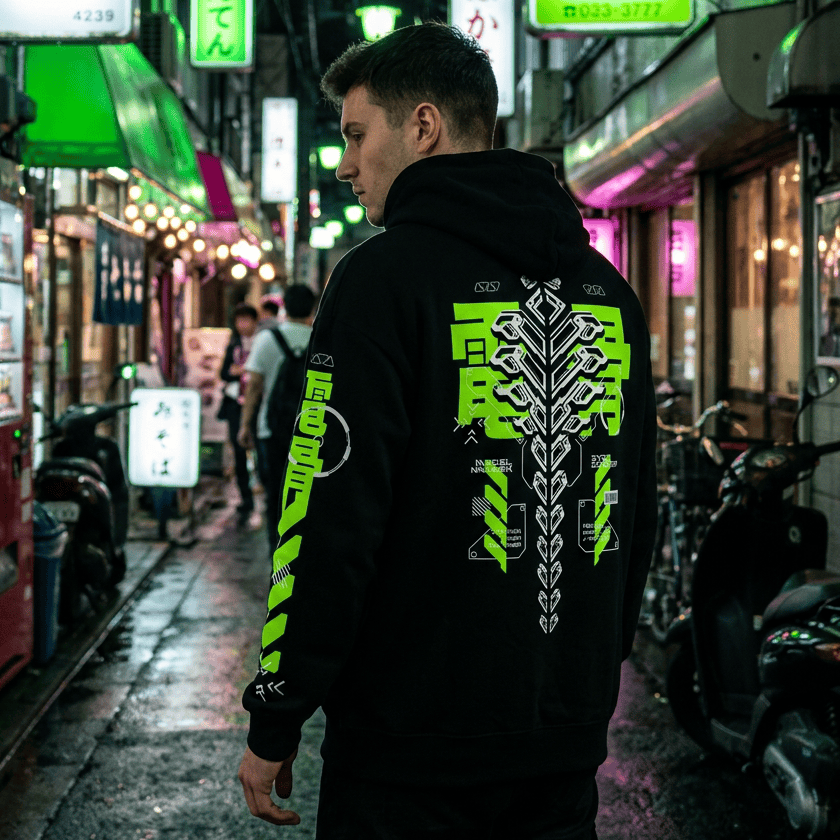
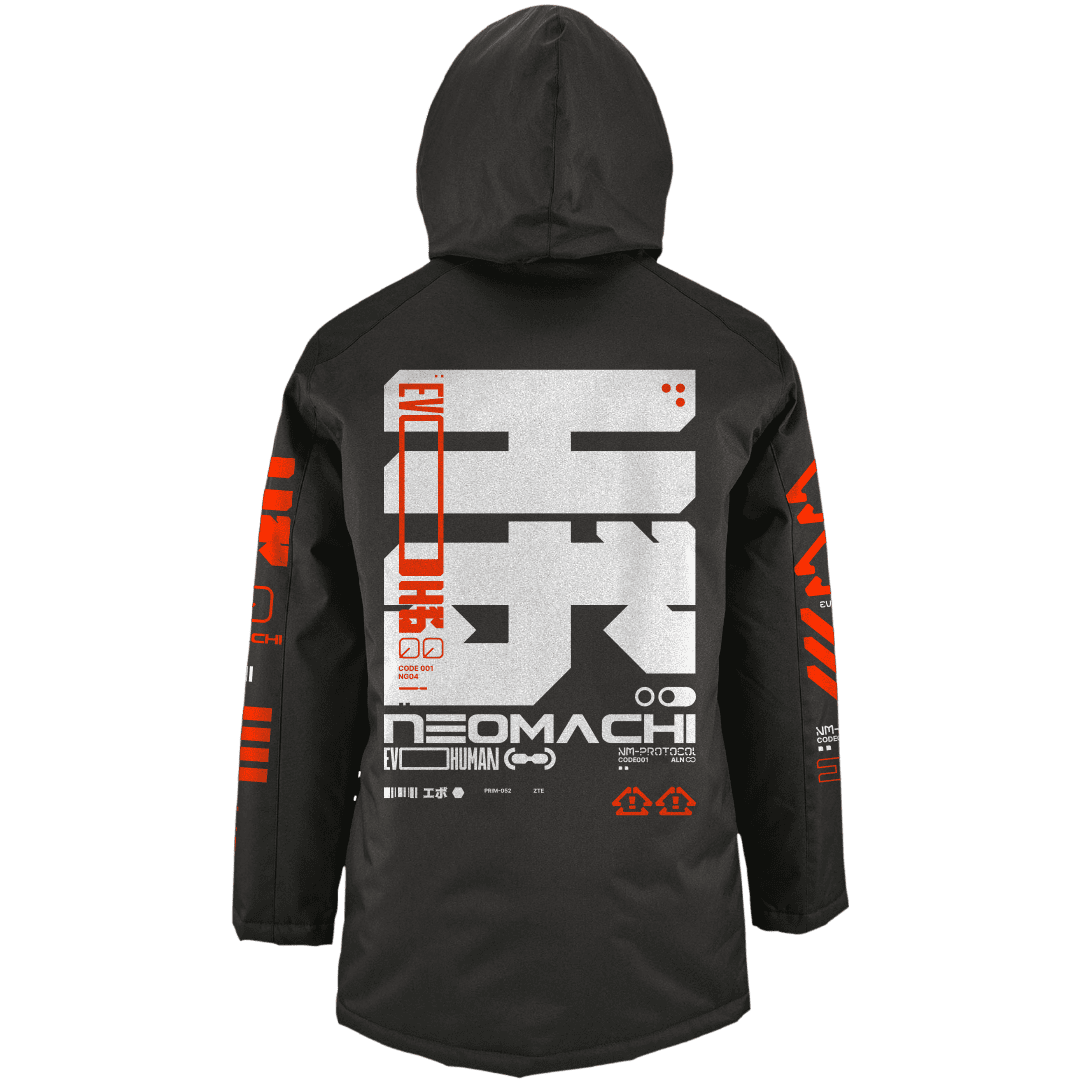
Our RYUU hoodie wraps an Eastern dragon in a neon HUD overlay with mecha stripes on the sleeves, which is about as cyberpunk as a dragon gets. The same design runs across a RYUU premium bomber, zip hoodie, windbreaker, parka, joggers and tee, so you can go full dragon or just one piece. Our hoodies fit true to size and slim, so size up for a relaxed look; how a hoodie should fit has the measurements.

Browse all our cyberpunk hoodies and cyberpunk t-shirts for more mythology, from the kirin to the death god.
Frequently asked questions
What does a Japanese dragon symbolise?
Strength, wisdom, protection and good fortune. Japanese dragons are water gods linked to rain, rivers and the sea, so they also stand for control over the forces of nature.
What is the Japanese word for dragon?
竜 or 龍, read ryū (sometimes ryō) or tatsu. The zodiac dragon is written 辰, also read tatsu. Ryūjin (龍神) means "dragon god".
Why do Japanese dragons have three toes?
By tradition Japanese art often shows dragons with three claws, while Chinese imperial dragons had five. A folk tale says dragons lost toes the further they flew from China. In reality three-clawed dragons also existed in China, and some Japanese dragons have four or five.
Who is Ryūjin?
Ryūjin is the dragon king of the sea in Japanese mythology. He lives in the undersea palace Ryūgū-jō and controls the tides with two jewels. His daughter Otohime appears in the story of Urashima Tarō.
Is a Japanese dragon good or evil?
Mostly good. Japanese dragons are usually protective water gods. The exceptions, like the eight-headed Yamata no Orochi, are closer to monsters than gods.
More symbols and the stories behind them are collected in our Japanese symbols and meanings guide. And when you are ready to wear one: original cyberpunk clothing, designed in Amsterdam and printed in Europe.