The cyberpunk aesthetic is "high tech, low life" turned into a look: rain-slick neon streets, dense signage in Japanese and English, chrome and cables next to grime, and people dressed in dark, practical layers with one loud detail. It started in 1980s sci-fi books and films, grew up in anime and games, and today shows up in photography, interiors, music and, yes, clothing. This guide breaks the aesthetic into its core ingredients, shows where each one came from, and explains how to wear it without looking like you are on your way to a convention.

What is the cyberpunk aesthetic?
Cyberpunk is a genre first and a style second. The stories are set in a near future where technology has raced ahead but society has not: megacorporations run everything, cities are vertical and crowded, and ordinary people hack, patch and modify their way through. The aesthetic is what that world looks like. Strip it back and you get five recurring ingredients:
- Night and neon. Most cyberpunk happens after dark, lit by signs, screens and headlights rather than the sun.
- Layered cities. Old streets under new towers, markets under motorways, everything stacked and patched.
- Tech worn on the body. Implants, visors, cables, interfaces: the line between person and machine blurs.
- Japanese influence. Kanji and katakana signage, Tokyo and Osaka street scenes, anime and manga visuals.
- Function over polish. Clothes and gear look used, practical and a bit improvised, not catwalk-clean.
If an image, room or outfit hits three or more of those, people will read it as cyberpunk.
Where the look came from
Books: the 1980s blueprint
Bruce Bethke's short story "Cyberpunk" (1983) gave the genre its name, and William Gibson's Neuromancer (1984) gave it its world: cyberspace, console cowboys and a sky "the color of television, tuned to a dead channel". Gibson's Chiba City, a Japanese sprawl of clinics and arcades, set the template for the Japan-meets-future feel. We dig into why that link is so strong in why cyberpunk is so Japanese.
Film: Blade Runner and the rain
Ridley Scott's Blade Runner (1982) is the visual reference almost everyone uses without knowing it: endless rain, steam, giant video adverts, crowded street stalls and Vangelis' synth score. Long coats, high collars and practical layers came from here too.
Anime and manga: Akira and Ghost in the Shell
Katsuhiro Otomo's Akira (manga from 1982, film 1988) brought bikes, red jackets and a shattered Neo-Tokyo. Ghost in the Shell (1995) added cyborg bodies, quiet philosophy and some of the most copied city shots in sci-fi. Our list of cyberpunk anime series covers the essential watching.
Games: Night City goes mainstream
Cyberpunk 2077 (2020) and Studio Trigger's Cyberpunk: Edgerunners (2022) put the look in front of millions of new fans, with bright yellow and cyan clashing against the usual black. With Edgerunners 2 on Netflix since October 2026, Blade Runner 2099 due on Prime Video and Apple TV's Neuromancer series set for January 2027, the aesthetic is having another big moment.
Cyberpunk aesthetic colours, type and textures
The fastest way to make anything look cyberpunk is the palette: a dark base (black, charcoal, gunmetal) with one or two electric accents such as magenta, cyan, acid green or warning yellow. We break down why that works in our cyberpunk colour palette guide.
Type matters almost as much. Mixed scripts (kanji next to Latin letters), monospaced "terminal" fonts, warning labels, serial numbers and glitch effects all say "machine world". If you want to know what the graphics on cyberpunk clothing are actually doing, read katakana, circuits and glitch; if you want to know what the Japanese symbols mean before you wear them, see Japanese symbols and their meanings.
Textures finish it: wet reflections, brushed metal, scuffed plastic, ripstop nylon and heavy cotton fleece. Cyberpunk is rarely glossy and new; it looks lived in.
Cyberpunk vs similar aesthetics
- Techwear borrows cyberpunk's function-first clothing but drops most of the story and colour. It is all black, straps and technical fabrics. More in techwear vs cyberpunk vs darkwear.
- Vaporwave uses similar neon colours but is nostalgic and ironic: pastel sunsets, Greek statues and 90s computers, not grimy streets.
- Synthwave is the 80s-retro cousin: chrome sunsets, grids and sports cars, more Miami than Chiba.
- Y2K is shiny, optimistic and playful, the future as imagined around 2000.
The full comparison is in cyberpunk vs vaporwave vs Y2K.
How to wear the cyberpunk aesthetic in real life
You do not need LEDs sewn into your sleeves. Real-world cyberpunk style is mostly about silhouette, colour and one strong graphic. Our full cyberpunk clothing guide goes deep; here is the short version.

1. Start with a dark base layer
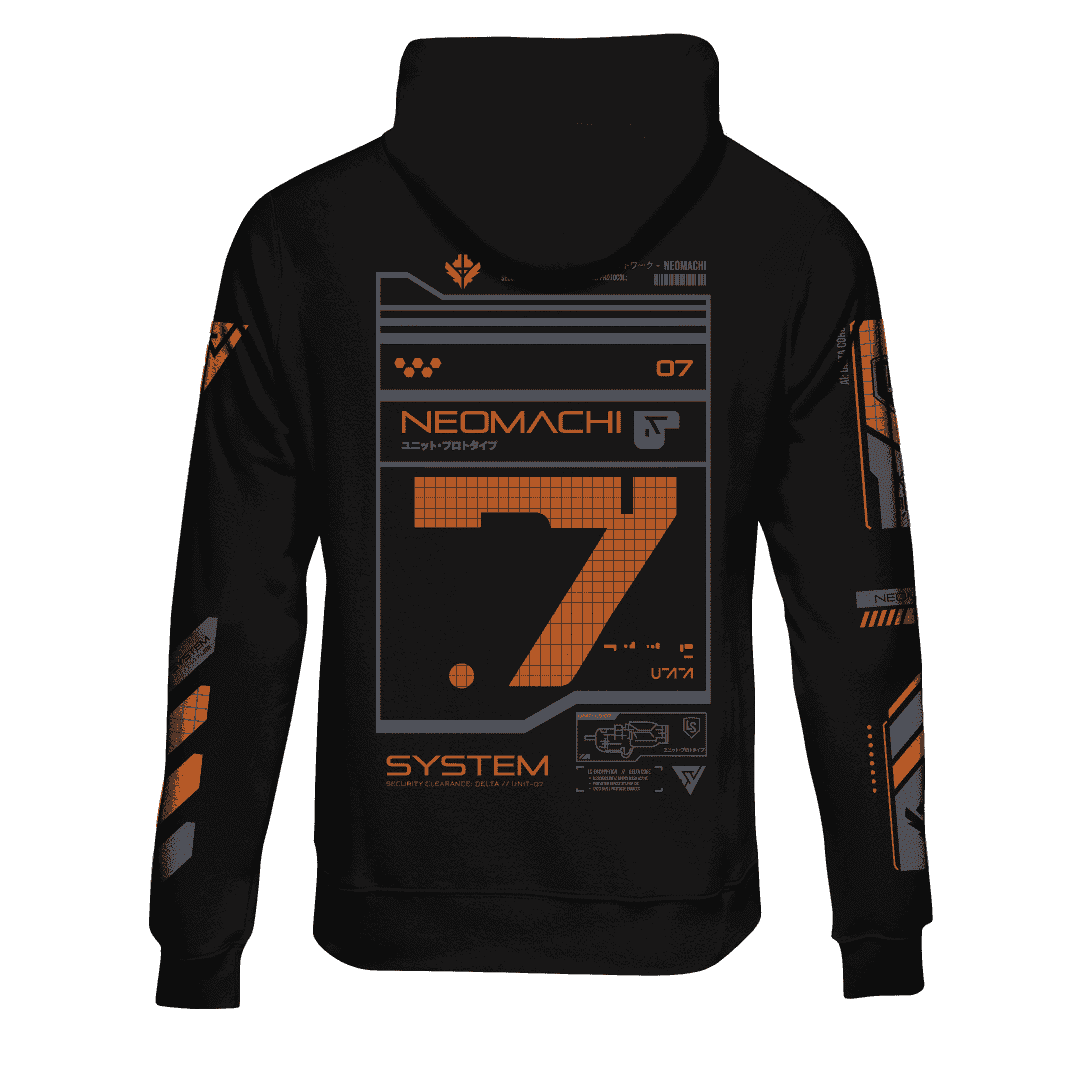
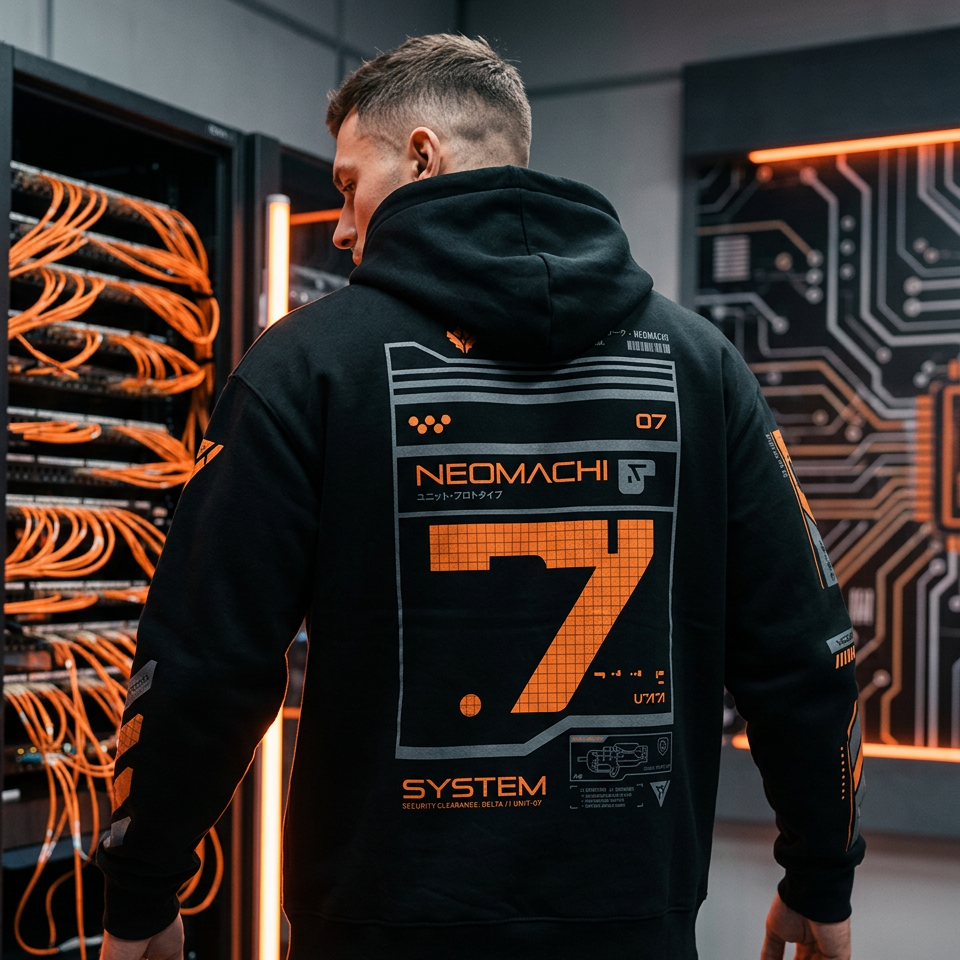
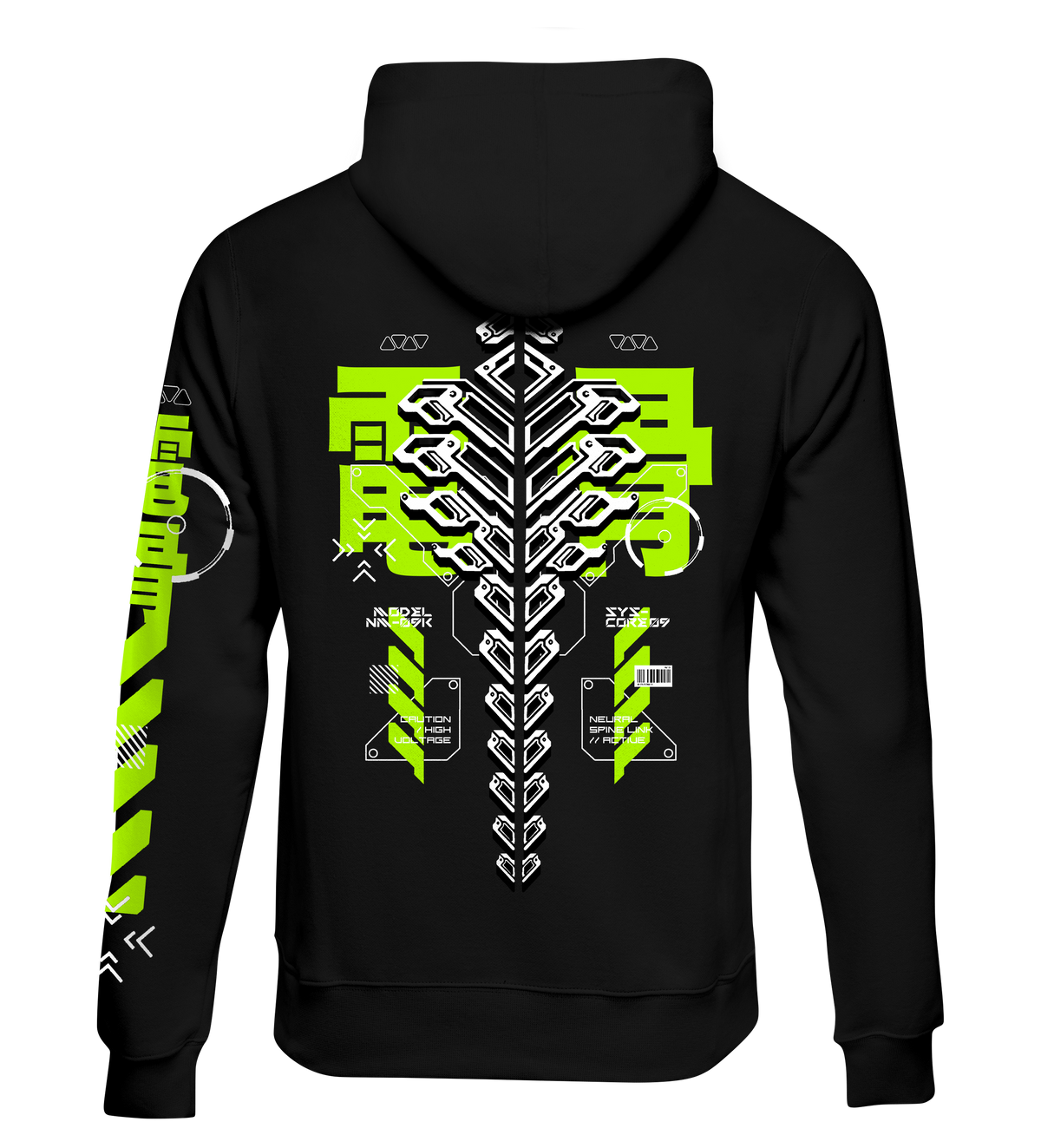
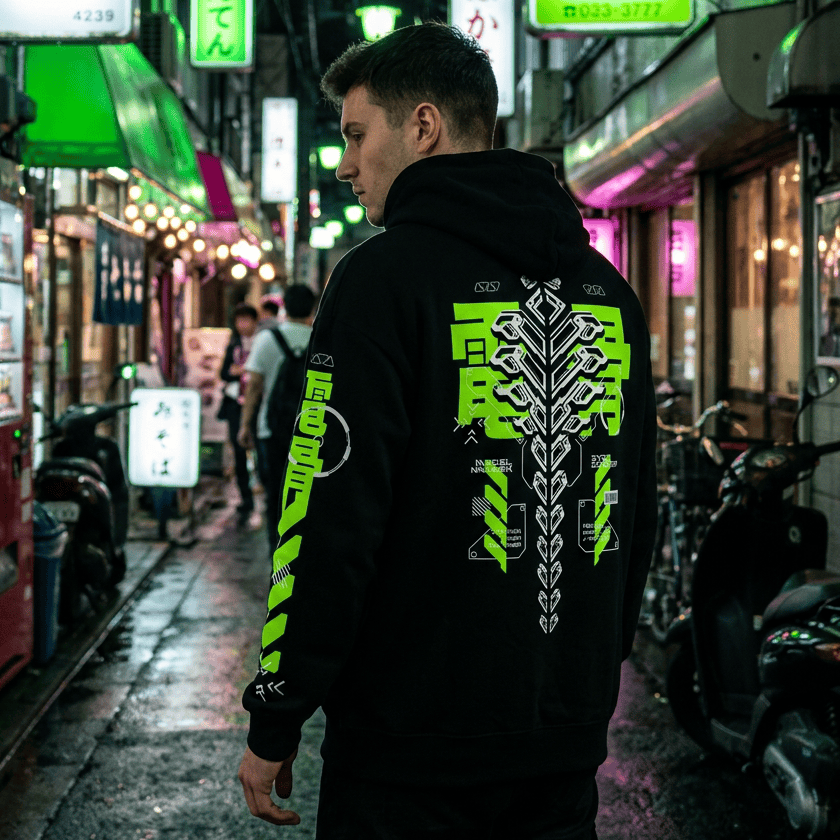
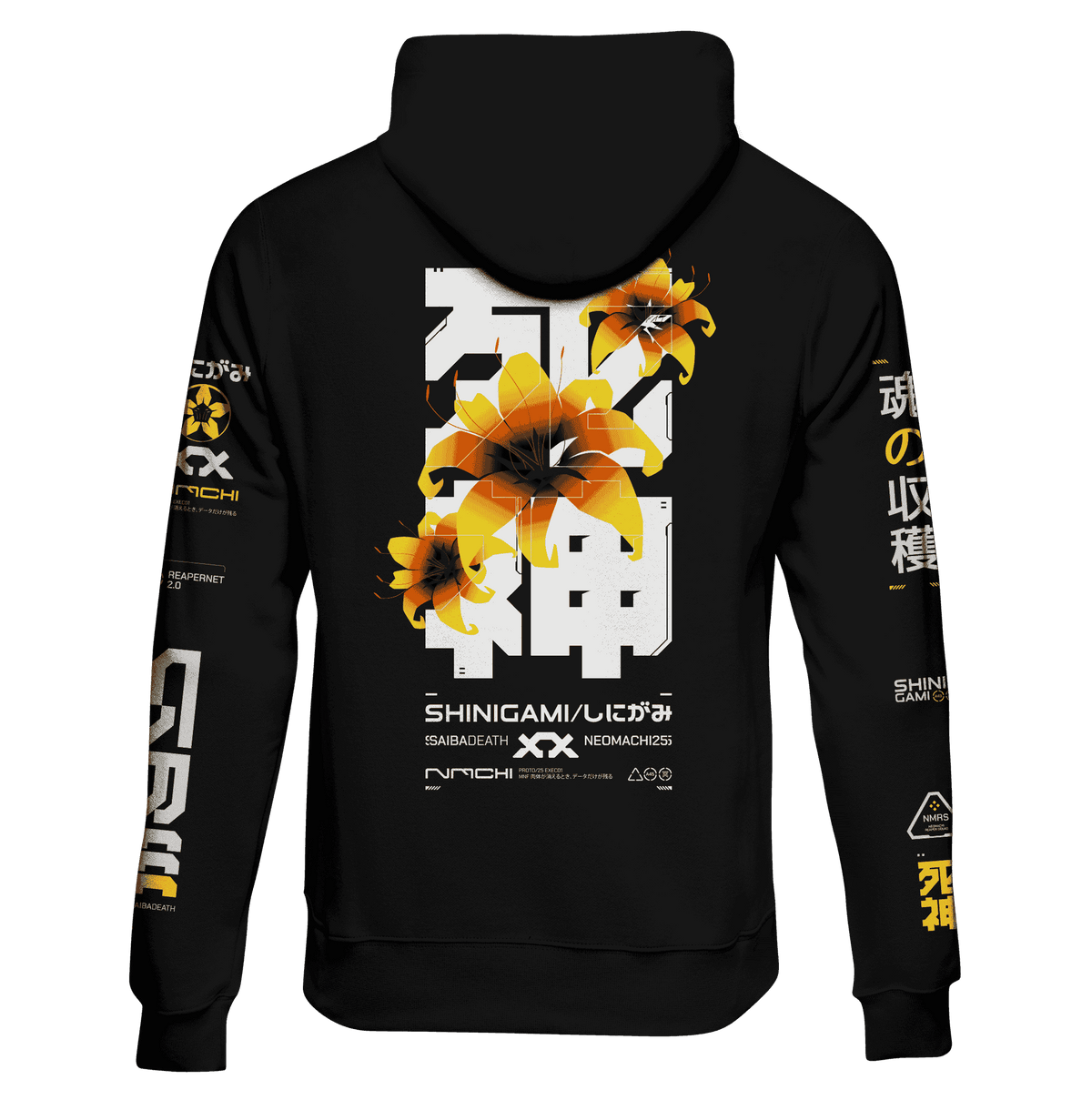
A black or charcoal hoodie is the backbone of the look. A big back print does the storytelling so the rest of the outfit can stay simple. The KISEKI hoodie (a cybernetic spine with the kanji for "miracle") and the SYSTEM 7 zip hoodie (retro-futuristic control panels) are two of the most-worn examples in our range. Browse the rest in cyberpunk hoodies.
Fit note: our hoodies are B&C Inspire Hooded, 280 GSM fleece in 80% organic cotton and 20% recycled polyester. They are true to size with a slim cut, so size up if you want the baggier street silhouette. Our hoodie fit guide has the measurements.
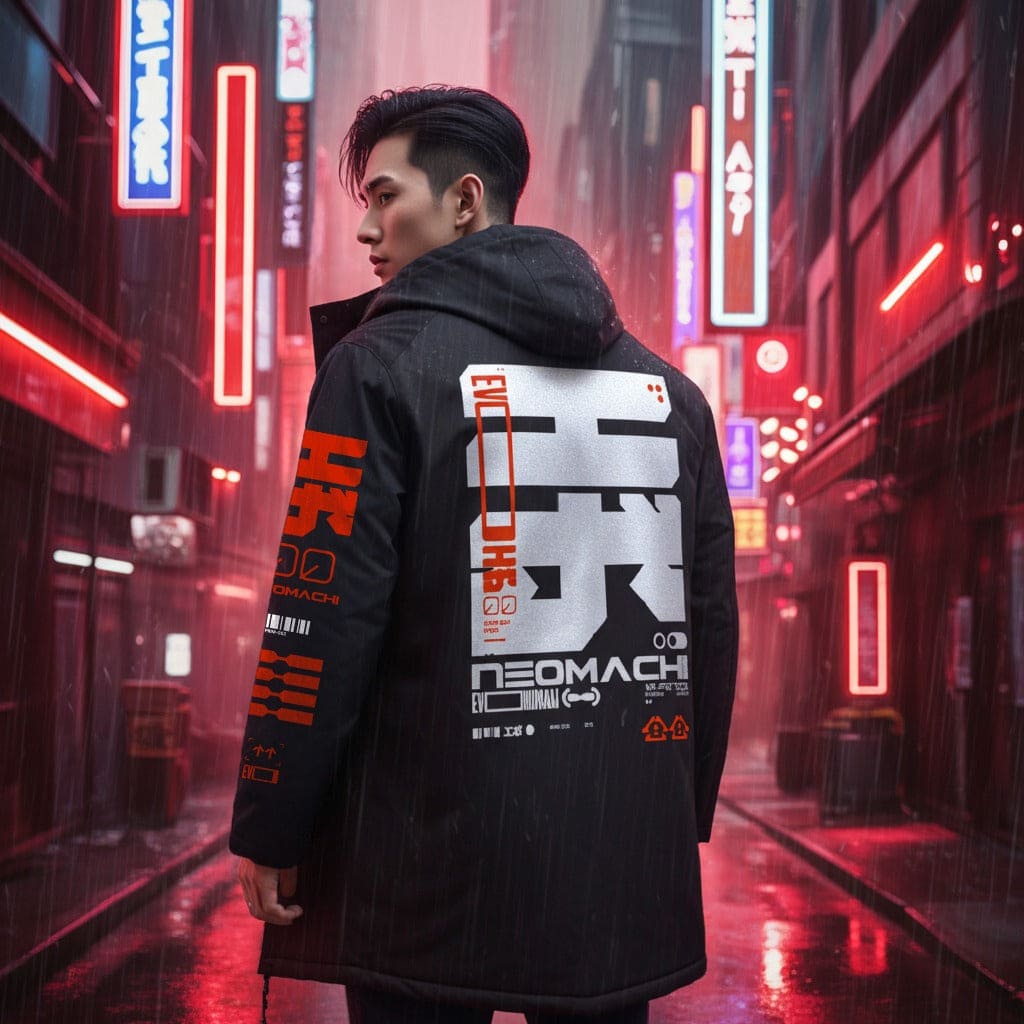
2. Add one technical outer layer
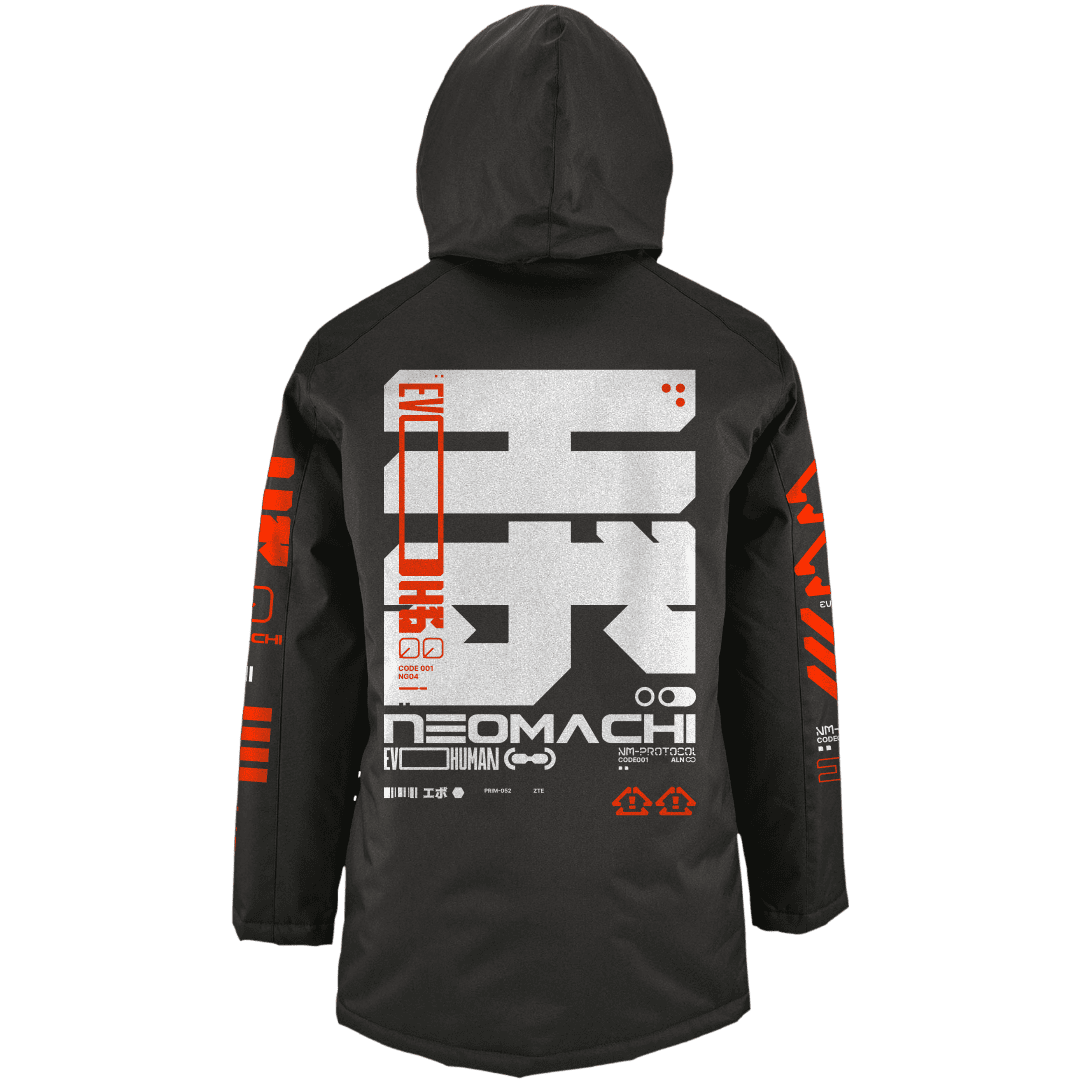
A windbreaker, bomber or parka over the hoodie gives you the layered, ready-for-rain shape from Blade Runner. The EVO windbreaker is the easiest place to start; the cyberpunk jackets guide explains which shape suits which weather.
3. Let Japanese art carry the culture
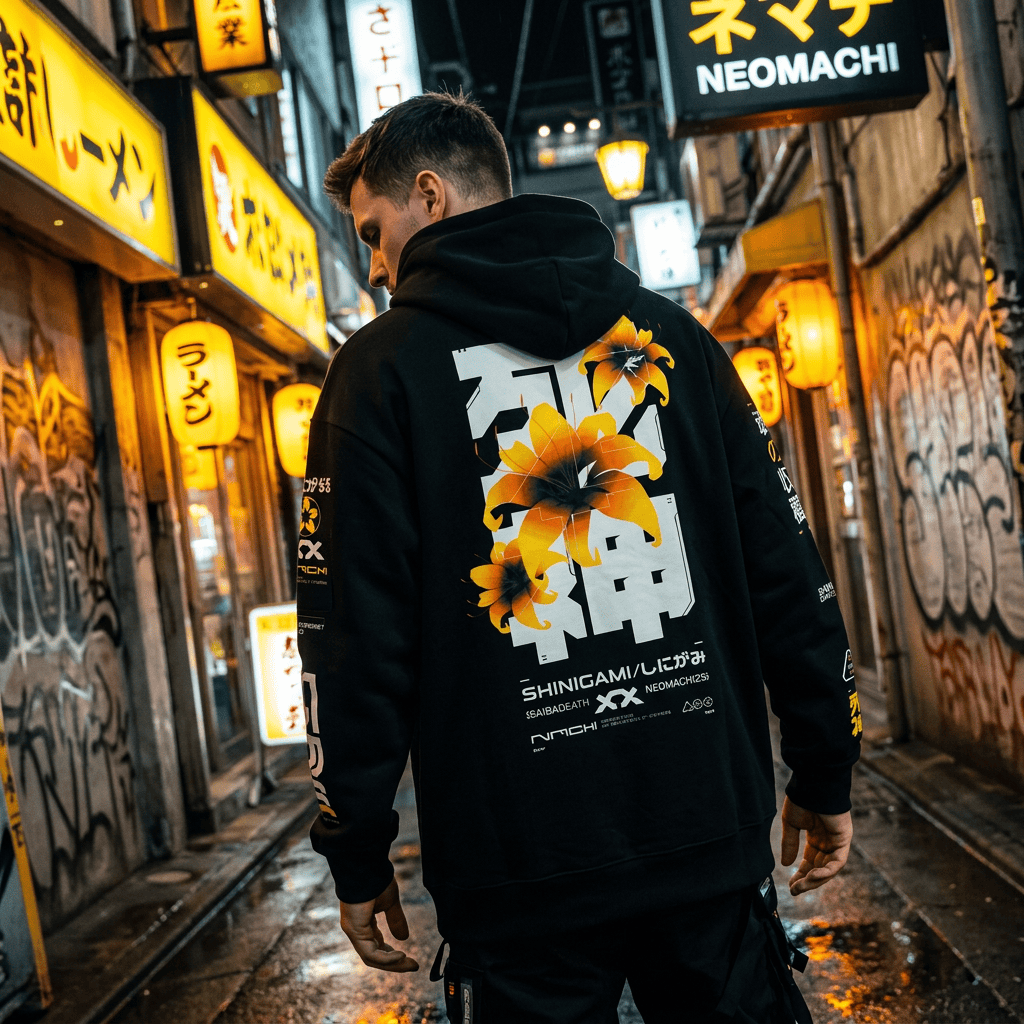
The aesthetic was always half Japanese. Designs drawn from folklore, like the spider lily and death god on the SHINIGAMI hoodie, connect you to that side without needing a costume. On warmer days, a graphic tee from our cyberpunk t-shirts collection does the same job (Stanley/Stella Creator 2.0, medium unisex fit).

4. Keep accessories functional
A crossbody bag, fingerless gloves, a beanie or a cap and chunky trainers or boots. One reflective or neon detail is plenty. Need full outfits? Try 10 cyberpunk outfit ideas or, for the everyday-not-cosplay version, how to dress cyberpunk without looking like you're in costume.
5. Pick your Night City
Different sources give different flavours. Blade Runner is moody and muted, Akira is red and loud, Edgerunners is bright yellow and cyan. Choose one reference and build around it; our Edgerunners outfits post shows how far one show's palette can take you.
Bringing the aesthetic home
Outside your wardrobe, the same rules apply. For a room or desk: dark walls or furniture, LED strips in one or two colours (pink and cyan are the classic pair), a few posters or prints with Japanese typography, and visible tech rather than hidden cables. For photos: shoot at night, after rain if you can, and look for reflections, signage and steam. For music: synthwave, darksynth and the Blade Runner and Akira soundtracks are the usual starting points.

Cyberpunk aesthetic FAQ
What is the cyberpunk aesthetic in simple terms?
A "high tech, low life" future: neon-lit cities at night, Japanese signage, people mixing technology into their bodies and clothes, and a gritty, lived-in feel rather than a clean utopia.
What colours are cyberpunk?
A dark base of black, charcoal or gunmetal, with one or two neon accents such as magenta, cyan, acid green or yellow. Keep the accents small and they stay stylish.
Is cyberpunk the same as techwear?
No. Techwear is a clothing style focused on technical fabrics and function, usually all black. Cyberpunk is a wider sci-fi aesthetic that also includes colour, graphics, story and Japanese influence. Many outfits mix the two.
How can I dress cyberpunk every day?
Wear a dark hoodie or tee with a strong graphic, add a practical jacket, keep trousers and shoes simple and dark, and limit yourself to one bright detail. That reads as cyberpunk without looking like cosplay.
What films and shows define the cyberpunk aesthetic?
Blade Runner, Akira, Ghost in the Shell, The Matrix, Cyberpunk 2077 and Cyberpunk: Edgerunners are the main references most people draw on.
Ready to build your own version? Start with our cyberpunk hoodies or browse all our cyberpunk clothing. You have 30 days to return if the fit is not right.