If there is one shape that says "Japan" instantly, it is the torii: two upright posts, two crossbeams, usually painted a vivid orange-red. It appears on postcards, in games and anime, on anything that wants to look vaguely Japanese, and on a lot of clothing.
But a torii is not decoration. It is a boundary marker with a specific job. Here is what it means and why it looks the way it does.
What is a torii gate?
A torii (鳥居) is the traditional gate at the entrance to a Shinto shrine. It marks the point where the ordinary world ends and sacred space begins. Passing underneath is a symbolic act: you are leaving the everyday behind and stepping into the realm of the kami, the spirits or deities of Shinto belief.
Large shrines often have several torii in sequence along the approach, each one taking you a step deeper into sacred ground. Some mark sacred mountains, rocks or trees rather than buildings: the gate defines the space, not the structure behind it.
Where does the name come from?
The characters in torii roughly mean "bird" and "to be", often read as "where the birds perch". The most popular explanation links it to the Shinto myth of Amaterasu, the sun goddess, hiding in a cave and plunging the world into darkness. The gods lured her out partly with the crowing of roosters, and birds became messengers associated with the divine. Historians still debate the true origin, and similar gate structures exist elsewhere in Asia.
Why are torii gates red?
Many torii, though not all, are painted shu-iro, a vermilion orange-red. The colour is traditionally believed to ward off evil and misfortune, and is associated with vitality and the sun. There was a practical side too: the traditional pigment contained mercury, which helped protect the wood from rot and insects.
Plenty of torii are left as bare wood or cut from stone, especially at older or more austere shrines such as Ise Grand Shrine.
The two main styles
There are dozens of variations, but most fall into two families:
- Shinmei torii: simple and straight. The top beam is flat and the whole structure is minimal. Associated with the oldest Shinto traditions.
- Myōjin torii: the more familiar shape, with an upper beam that curves upward at the ends like a gentle smile. Most of the red torii you picture are this type.
The most famous torii in Japan
Itsukushima Shrine, Miyajima. The "floating" torii stands in the sea; at high tide it appears to hover on the water, and at low tide you can walk out to it.
Fushimi Inari Taisha, Kyoto. Thousands of vermilion gates, each donated by a business or individual, form tunnels winding up Mount Inari. The shrine is dedicated to Inari, whose messengers are foxes. More on that in our guide to kitsune.
Hakone Shrine. A red torii rising from the edge of Lake Ashi, best seen from the water.
How to walk through a torii
A few customs are widely observed:
- Bow once before passing through, as a greeting to the kami.
- Walk to one side. The centre of the path (seichū) is traditionally reserved for the kami.
- Bow again when you leave, turning to face the shrine.
Nobody expects visitors to be perfect, but these small gestures are appreciated.
What does a torii symbolise?
Beyond its religious role, the torii has become a symbol of transition: crossing a threshold, entering a new phase, leaving something behind. That is why it is such a popular motif in art, tattoos and design. It is a doorway you can carry with you.
The torii, reimagined
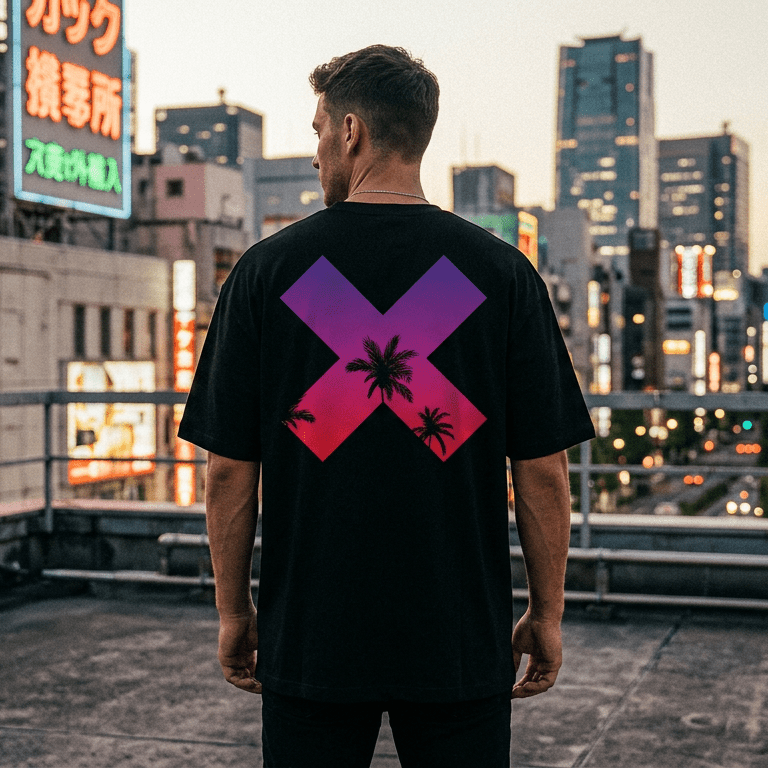
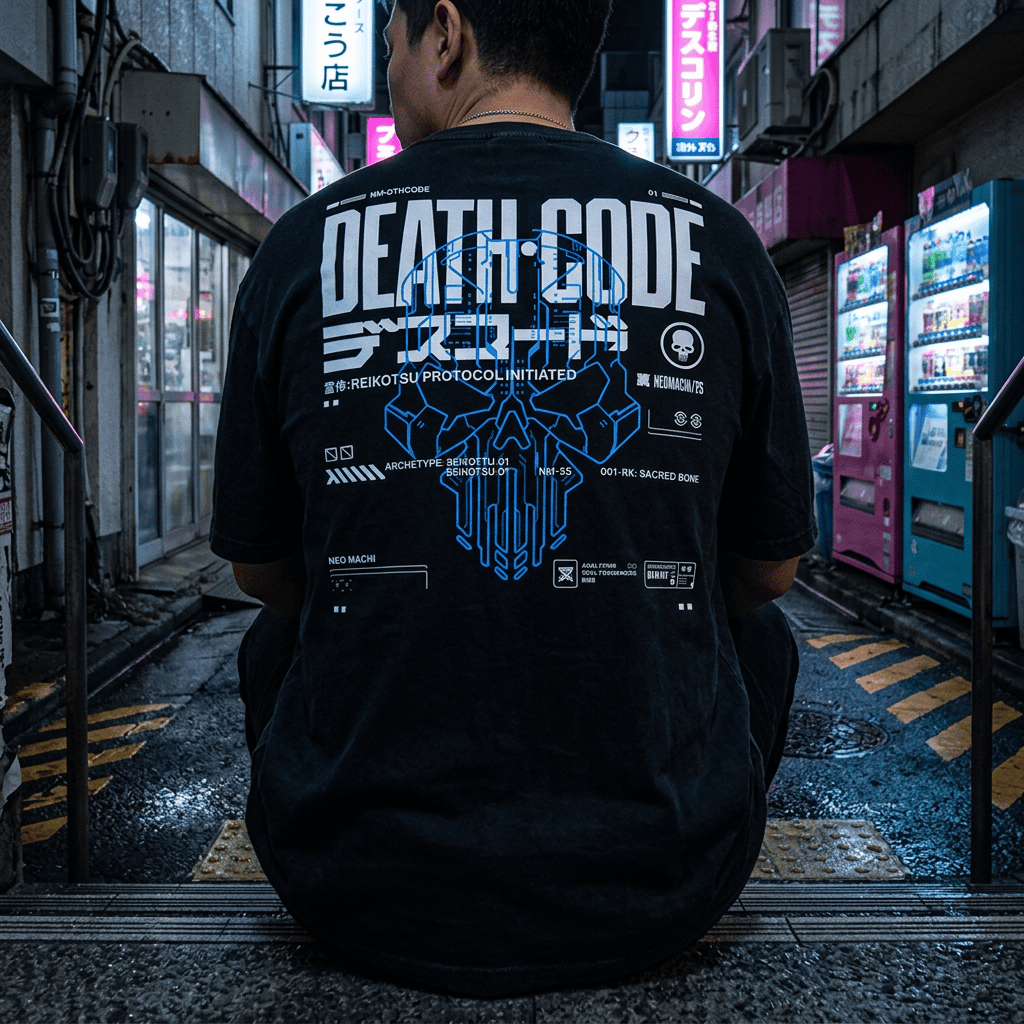
Our TORII t-shirt takes this ancient Shinto symbol and places it at the edge of the neon city: a gate between the traditional and the electric. It also comes as a hoodie and a bomber jacket.
Frequently asked questions
Can anyone walk through a torii gate?
Yes. Torii are open to everyone, whatever their beliefs. Walking respectfully is all that is asked.
Is a torii Buddhist or Shinto?
Shinto. Buddhist temples have their own gates, called sanmon, though some sites combine both traditions.
What does a torii tattoo mean?
Usually transition, a spiritual journey or a connection to Japan. It is often paired with foxes, cherry blossom or Mount Fuji.
Step through
See more designs rooted in Japanese tradition across the full range, or read what Mount Fuji means to Japan.
New to NEOMACHI? Sign up to our emails and get 15% off your first order.