In Japan the tiger (虎, tora) means courage, strength and protection: it is the guardian that scares off evil, the earthly rival of the dragon, and, as Byakko, the White Tiger that watches over the west. What makes it strange, and a little brilliant, is that Japan has had no wild tigers in all of recorded history. Everything Japanese artists knew about the animal came from imported paintings, a few pelts and, quite possibly, the family cat. Here is what the Japanese tiger means, where the symbol came from, and why it still works so well on a hoodie.
What does the tiger symbolise in Japan?
The short version: power that protects. A tiger in Japanese art is rarely the villain. It is the thing you put at the door so worse things stay out. The main meanings:
- Courage and strength. The obvious one. The tiger is the bravest animal in the bestiary that came over from China and Korea.
- Protection against evil. Tigers guard temples, gates and, in tattoo art, the person wearing them, against bad spirits, illness and bad luck.
- The earth, opposite the dragon. The dragon rules the sky and the water; the tiger rules the land. Together they are balance.
- The west and autumn. As Byakko, the White Tiger, it is one of the four guardian beasts of the compass.
- Resilience. Painted with bamboo, the tiger's raw power meets something that bends in the wind but does not break.

The tiger Japan never saw
Tigers are not native to Japan. The closest wild populations lived in Korea, north-east China and Siberia. A handful of live tigers reached Japan as gifts to warlords and shoguns, but most painters never saw one. They worked from Chinese and Korean paintings and imported pelts, and many painted leopards believing they were female tigers.
The giveaway is in the eyes. Maruyama Ōkyo's Sitting Tiger (1777) has green, almond-shaped eyes with slit pupils, which belong to a house cat, not a tiger. Look at enough Edo-period tigers and you start to see it everywhere: chunky paws, round faces, a slightly grumpy expression. Japan's tigers are part myth, part moggy. Later, Kishi Ganku (1749/56–1838) became famous for tigers that feel heavier and wilder.
That gap between the real animal and the imagined one is exactly why the Japanese tiger is so good as art. It was never a wildlife study. It was always a symbol first.
Tiger and dragon: what they mean together
The tiger and dragon (ryūko, 龍虎) is one of the most popular pairings in Japanese painting, borrowed from Chinese art. In Maruyama Ōkyo's pair of scrolls Dragon and Tiger (1770), now at the Met, the dragon sits in the clouds on the right and the tiger glares up at it from the left. The dragon presides over the heavens and the water; the tiger rules the earth.
In Taoist thinking the dragon is yang (active) and the tiger is yin (receptive), so the pair stands for balance between opposing forces rather than a fight with a winner. Zen temples painted them across sliding doors for exactly that reason. In a tattoo or a print, tiger plus dragon usually means the same thing: two kinds of strength held in balance. The dragon side of that story, and how a carp earns the right to become one, is in our koi fish meaning post.
Byakko, the White Tiger of the West
Byakko (白虎) is one of the Shijin, the Four Gods who guard the directions:
- Seiryū, the Azure Dragon: east, spring.
- Suzaku, the Vermilion Bird: south, summer.
- Byakko, the White Tiger: west, autumn, the element metal.
- Genbu, the Black Tortoise: north, winter.
The idea came from China, where the White Tiger was a constellation of seven lunar mansions in the western sky. In Japan it shows up early: in the Kitora Tomb in Asuka, painted around the start of the 8th century, Byakko guards the west wall, facing the Azure Dragon on the east. If you like the rest of the Japanese bestiary, the kirin and the Japanese phoenix come from the same world of auspicious beasts.
Tigers, oni and the demon gate
Ever wondered why oni wear tiger-skin loincloths? It comes from the old compass. North-east was the kimon (鬼門), the "demon gate", the unlucky direction evil was said to come from. On the zodiac compass, north-east sits between the ox and the tiger, ushitora (丑寅). So oni got the ox's horns and the tiger's skin. We dig into the rest of Japan's demons, and how oni differ from akuma and yōkai, in Japanese demons explained.
The tiger in irezumi and everyday Japanese
In traditional Japanese tattooing the tiger is a protector: against evil spirits, disease and bad luck, and a statement of courage. It is often paired with a dragon, often shown in bamboo or wind, and it almost always looks straight at you. Our irezumi guide covers how the classic motifs fit together.
The tiger also lives on in the language:
- Tora no i o karu kitsune (虎の威を借る狐): "the fox that borrows the tiger's might", someone who acts tough on someone else's authority. The fox side of that story is in our kitsune meaning post.
- Koketsu ni irazunba koji o ezu (虎穴に入らずんば虎子を得ず): "if you don't enter the tiger's den, you won't catch its cub". Nothing ventured, nothing gained.
- Tora no maki (虎の巻): "the tiger scroll", originally a secret chapter of a Chinese book on strategy, today any secret manual or crib sheet.
The tiger (寅) is also the third animal of the zodiac, and Osaka's famous baseball team is the Hanshin Tigers. The animal never roamed historical Japan, but it is everywhere.
How we draw the tiger at NEOMACHI
We have two tigers, and they pull in different directions.
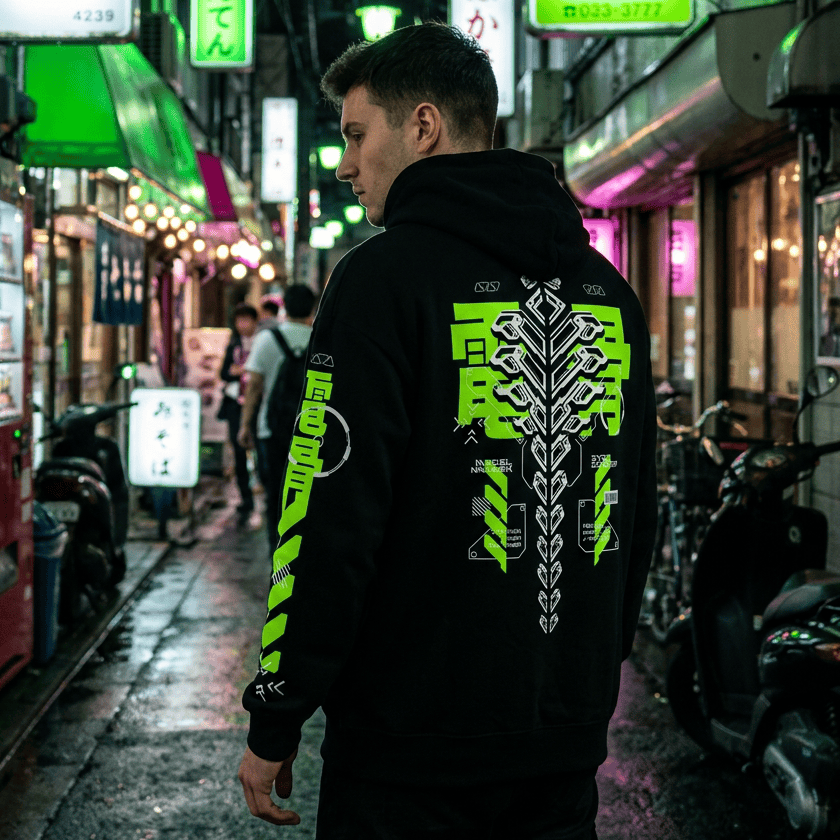
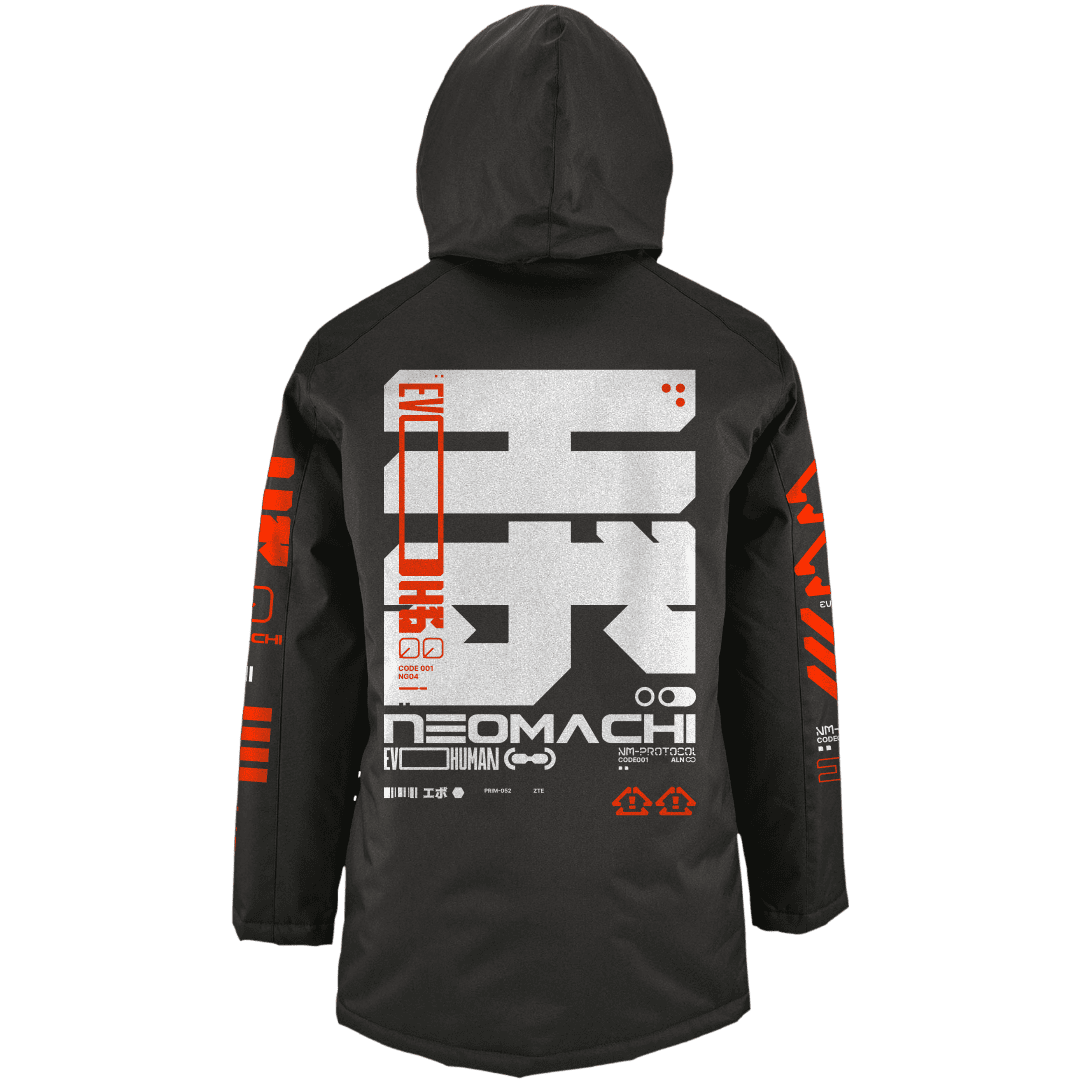
TORA takes the guardian tiger and runs it through a futuristic interface: the old protector, rebuilt for the neon age. It comes as a t-shirt, a hoodie and a bomber jacket, so you can wear the same guardian all year.

TIGERU is the pop-art tiger: bold colour, clean line, the kind of illustration you keep finding new details in. And if you want the "inner tiger" without an actual tiger, HAGESHI (fierce) carries the same energy.
How to wear it: let the tiger be the one loud piece. A tiger back print with black trousers and plain trainers looks like streetwear; add a tiger cap and tiger socks and you are in costume. Our hoodies are true to size and slim, so size up for a baggier fit (the hoodie fit guide has the measurements), and tees are a medium unisex fit. Browse the rest of our cyberpunk hoodies and cyberpunk t-shirts, or start from the full range of cyberpunk clothing inspired by Japanese art.

For more Japanese animals and what they mean, from the wolf god to the lucky cat, see our guide to Japanese symbols and their meanings.
Frequently asked questions
What does the tiger symbolise in Japan?
Courage, strength and protection. The Japanese tiger guards against evil, illness and bad luck, rules the earth opposite the dragon, and as Byakko it guards the west.
What is the Japanese word for tiger?
Tora, written 虎. The tiger of the zodiac is written 寅, and the White Tiger guardian is Byakko (白虎).
What does a tiger and dragon together mean?
Balance. The dragon rules the sky and water, the tiger rules the earth; in Taoist terms they are yang and yin. Paired in a painting or tattoo, they stand for two opposing strengths in harmony, not a fight.
Are there tigers in Japan?
Not in the wild, at least not in recorded history. Japanese artists painted tigers from Chinese and Korean art, imported pelts and, it seems, house cats, which is why many old Japanese tigers have cat-like eyes.
Why do oni wear tiger skin?
Because evil was said to come from the north-east, the "demon gate", which sits between the ox and the tiger on the zodiac compass. Oni got ox horns and tiger-skin loincloths to match.