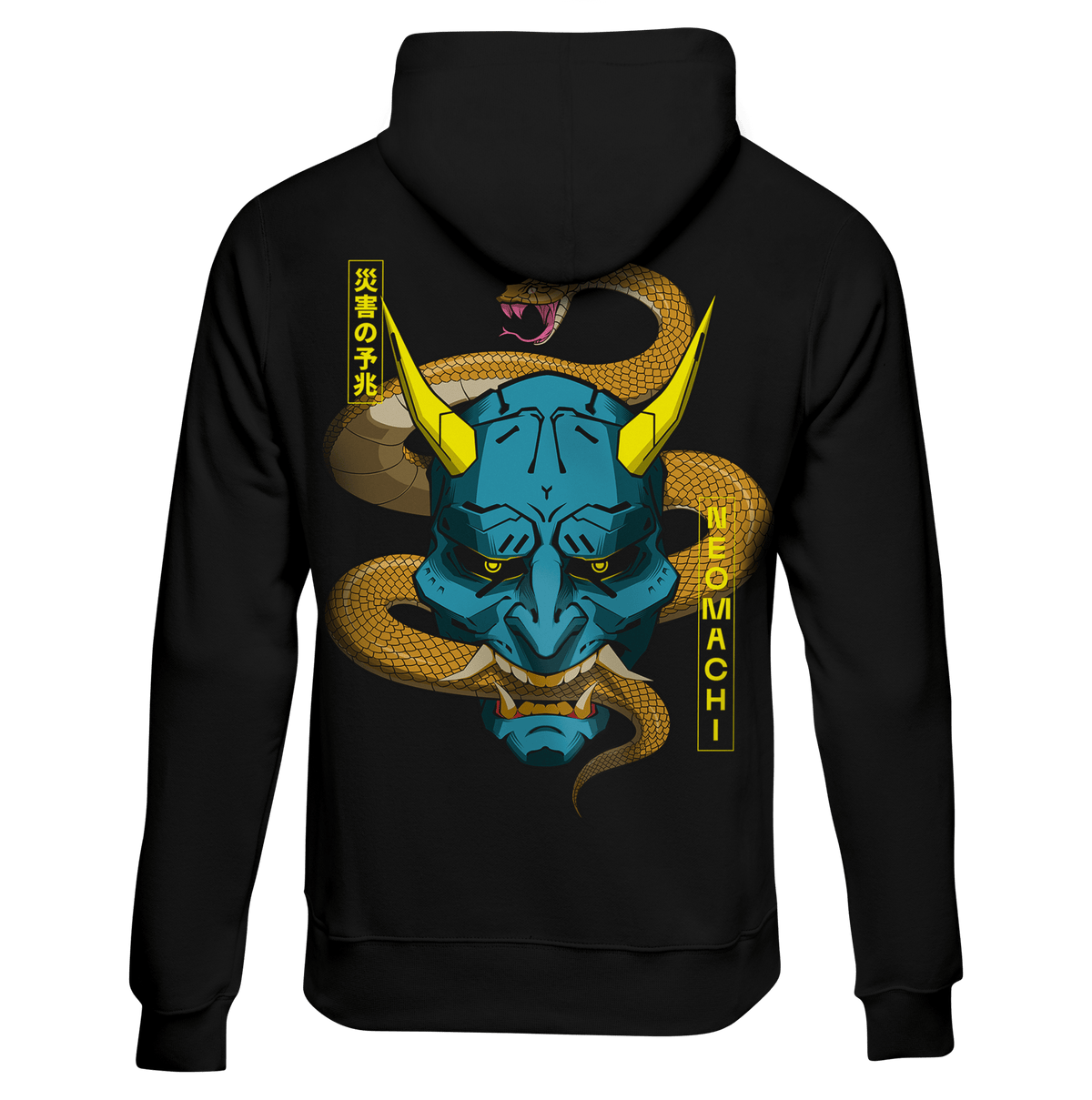
A hannya mask shows a woman who has been turned into a demon by jealousy, rage and grief. That is the short answer to the hannya mask meaning: it comes from Japanese Noh theatre, where the horned, grinning face reveals what a character has become once her resentment takes over. But the mask is more complicated than "scary demon". Tilt it down and the snarl turns into sorrow, which is exactly why it became one of the most loved images in Japanese tattooing, art and, more recently, cyberpunk design.
Here is everything worth knowing: where the hannya comes from, what its colours and stages mean, what a hannya tattoo says about the wearer, and how it ended up on hoodies in the neon age.

What does a hannya mask mean?
In Noh, the hannya represents a female onryō: a vengeful spirit. She is not born a monster. She is a woman whose love has curdled into obsession, betrayal or jealousy, until the feeling consumes her and she transforms. The mask captures that moment of transformation, with:
- Two sharp horns rising from the forehead
- Metallic, gold-painted eyes that catch the stage light
- A wide, leering mouth full of fangs
- Furrowed, anguished brows that look more pained than evil
That last detail is the key. The hannya is a picture of suffering as much as of fury. Noh masks are carved to change with the angle of the actor's head: facing the audience straight on, the hannya looks terrifying; tilted slightly down, she appears to be weeping. One face holds both the anger and the heartbreak behind it.
Where does the name come from?
Hannya (般若) is the Japanese reading of the Sanskrit Buddhist word prajñā, meaning wisdom. Odd name for a demon, and there are a few explanations. One credits a monk-carver called Hannya-bō, said to have perfected the mask in the late 1400s. Another points to a line in the play Aoi no Ue referring to the chanting of the Heart Sutra (the Hannya Shingyō), used to drive the demon away. A third simply says making a mask this expressive took great wisdom.
The hannya in Noh theatre
The mask appears in some of Noh's most famous plays, usually in the second half, once the character's true nature is revealed:
- Aoi no Ue: Lady Rokujō, a noblewoman from The Tale of Genji, is so consumed by jealousy towards Genji's wife that her spirit attacks her. In the second act she appears as a hannya.
- Dōjōji: a young woman, rejected by a monk, transforms into a serpent and pursues him to a temple bell, where he is hiding. The snake connection matters; more on that below.
- Kurozuka (also called Adachigahara): a lonely old woman offering shelter to travelling monks is revealed as a man-eating demon.
What do the hannya mask colours mean?
Colour tells the audience who the woman was before she changed:
- White hannya: a refined, aristocratic woman, such as Lady Rokujō.
- Red hannya: a less refined character, like the young woman in Dōjōji.
- Dark red hannya: a true demon who only pretended to be human, as in Kurozuka and Momijigari.
The stages of transformation
Noh actually has a whole family of "jealous woman" masks, showing how far the transformation has gone. Namanari has small horns just breaking through: a woman still clinging to her humanity. Chūnari is the classic hannya, fully transformed. Honnari (the ja or shinja masks) goes all the way into a snake-like creature, with a forked tongue and sometimes no ears at all. So the hannya is the middle of the story, not the end: still human enough to suffer.
Hannya mask tattoo meaning
Hannya masks are one of the classic motifs of irezumi, traditional Japanese tattooing. People wear them for different reasons, and the meaning depends partly on what the mask is paired with:
- Protection. Like oni imagery, a fearsome face is believed to scare off bad luck and evil spirits.
- Complex emotion. A reminder that love, jealousy and pain are tangled together, and of what happens when you let one feeling take over.
- Transformation. Surviving something that changed you.
- With a snake: a nod to Dōjōji, and often read as protection, wisdom or rebirth.
- With a dragon: a clash of elemental forces; the dragon brings power and strength, the hannya brings raw emotion.
Our irezumi guide covers the other big tattoo symbols (koi, dragons, tigers, peonies), and Japanese symbols and their meanings is the quick visual reference.
Hannya vs oni: what is the difference?
People often mix them up because both have horns and fangs. The difference is the backstory:
- An oni is a creature: an ogre-like yōkai, usually male, with red or blue skin, a tiger-skin loincloth and an iron club. Oni are born monsters.
- A hannya is a person who became a monster. She is always female, always human first, and her horns come from emotion rather than nature.
That is why the hannya feels more tragic, and why she works so well in art about identity and change. For the full family of Japanese monsters, read Oni, Akuma and Yōkai: Japanese Demons Explained.
From Noh stage to Night City: the hannya in pop culture and cyberpunk
The hannya has never really left the stage; it has just moved to new ones. Gamers know it from Goro Majima's back tattoo in the Yakuza / Like a Dragon series, and from Ghostwire: Tokyo, where the villain hides behind a hannya mask in a deserted, neon-soaked Shibuya. It turns up in Sekiro and the Fatal Frame horror series too.
It fits cyberpunk almost too well. Cyberpunk is about bodies and identities being rewritten, about humans becoming something else, often through obsession. A woman remade by her own emotions is a very old version of that story. Swap the emotion for chrome and you are halfway to Night City. (We go deeper on that link in why cyberpunk is so Japanese.)
HEBI: the robotic hannya
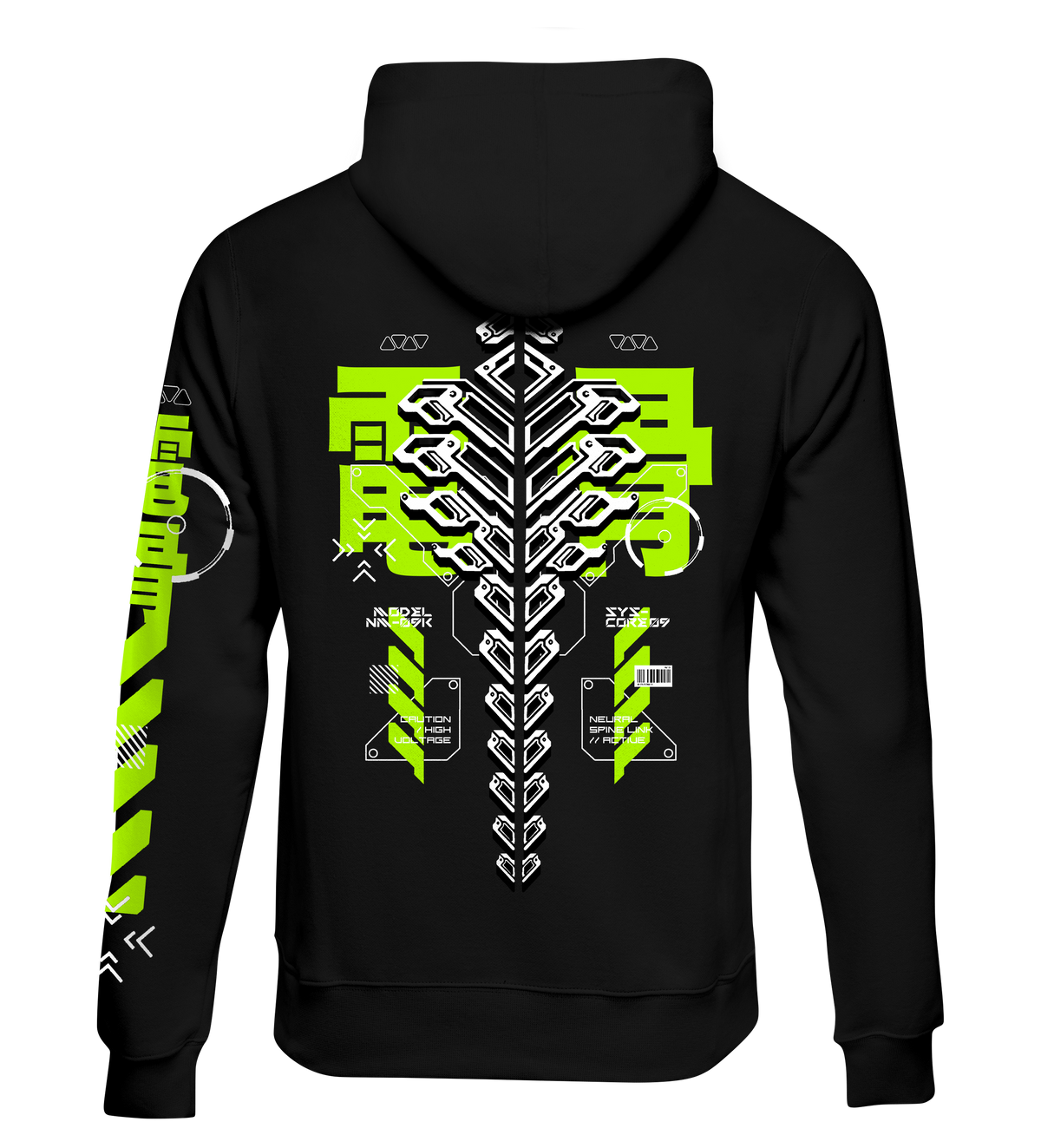
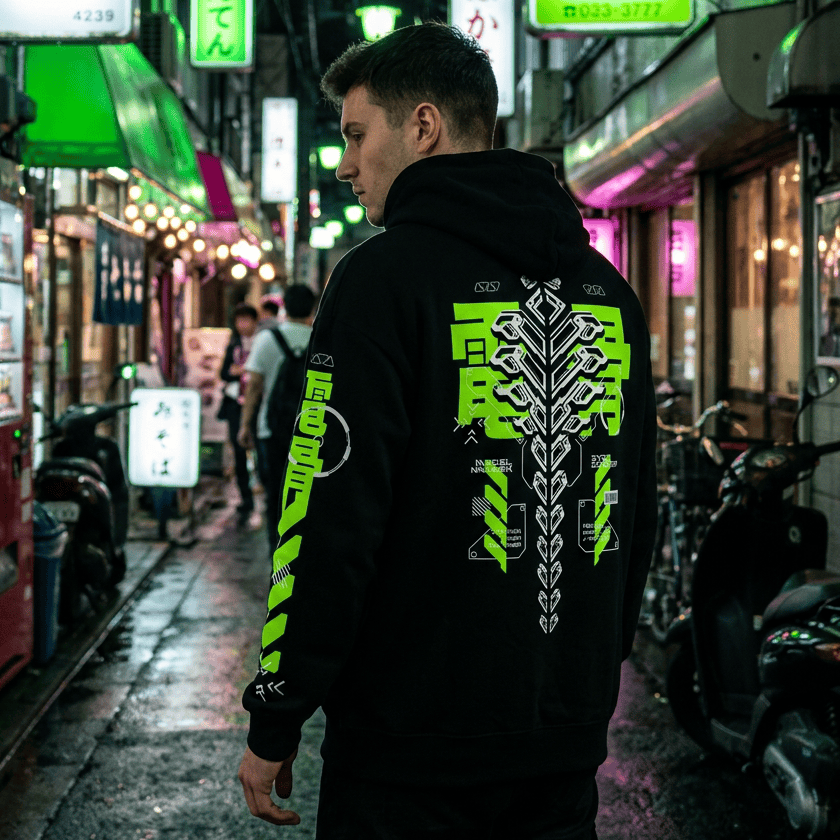
Our HEBI design (hebi means snake) takes that idea literally. A robotic hannya mask shares the frame with a living snake: machine and organism, neither giving ground. It is a quiet nod to Dōjōji, where the jealous woman's final form is a serpent, rebuilt for the cyberpunk age. HEBI comes as a hoodie, a t-shirt and a sweater.

TATAKAI: hannya vs dragon
Tatakai means battle. The design puts the hannya face to face with a Japanese dragon, the two forces most often paired in irezumi, and refuses to name a winner. It is on our TATAKAI gaming mouse pad, so the fight sits under your hand every session, and on TATAKAI shorts.

Wearing a hannya: Halloween, cons and every day
The hannya makes a great Halloween or con look that does not end up in the bin the morning after. Pair a HEBI hoodie with black cargo or techwear trousers, add a hannya half-mask from a costume shop, and you are a cyber-demon who can still wear the hoodie all winter. An ONI hoodie works for the male-demon version. More ideas in our cyberpunk Halloween costume ideas.
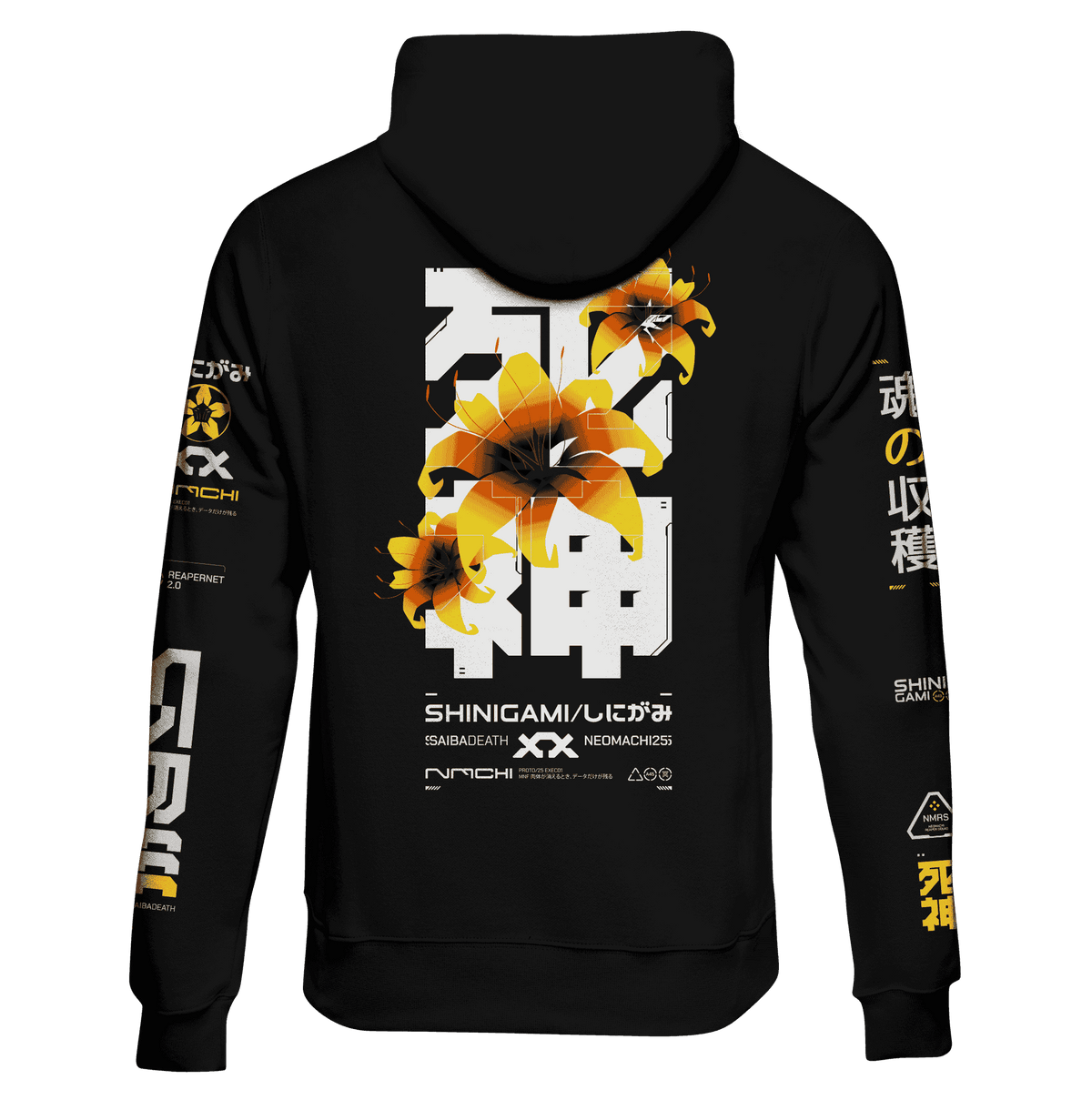
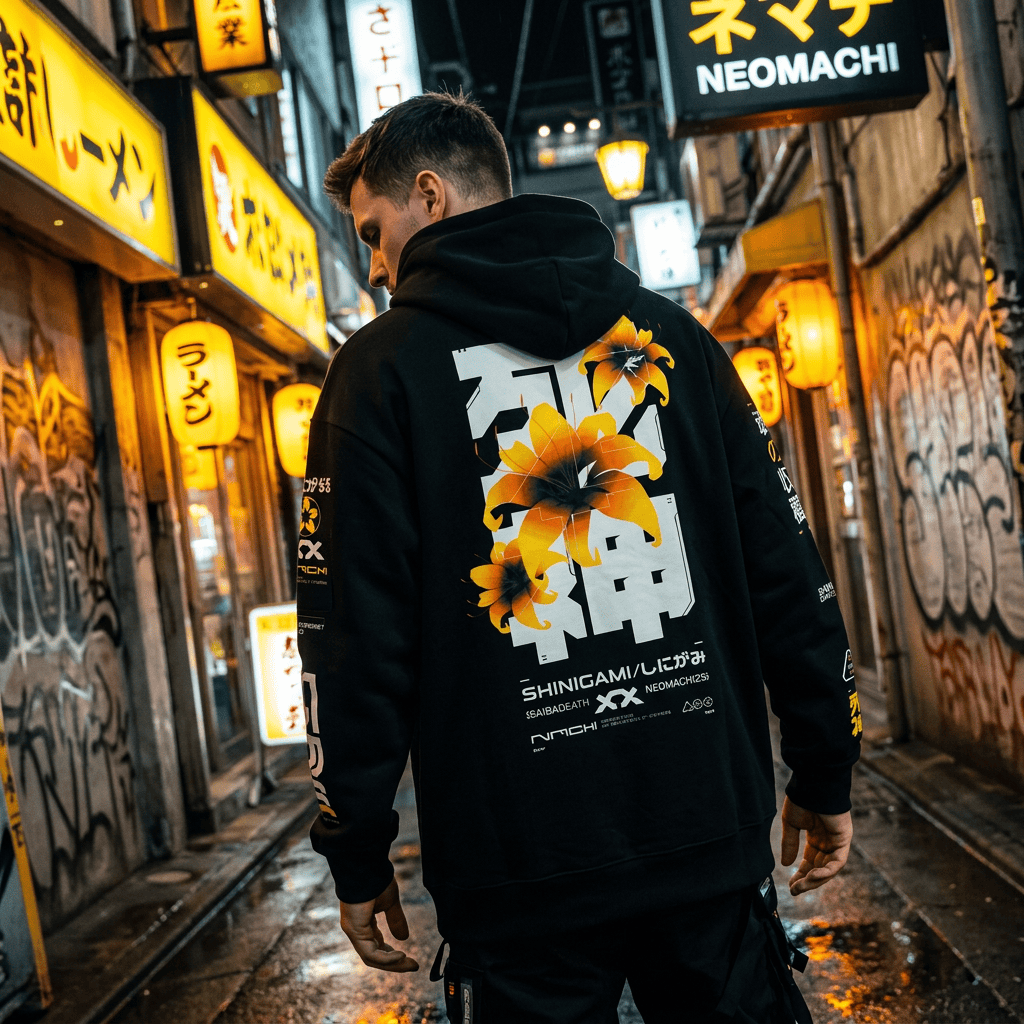
A few practical notes: our hoodies are B&C Inspire Hooded, 280 GSM, 80% organic cotton with a 20% recycled polyester fleece lining. They fit true to size and slim, so size up if you want a baggier look (how should a hoodie fit? has the full size chart). There are plenty of folklore designs in our cyberpunk hoodies collection and our cyberpunk t-shirts, and you have 30 days to return if the fit is not right.
Frequently asked questions
What does a hannya mask symbolise?
A woman transformed into a demon by jealousy, rage or grief. It symbolises the destructive power of obsessive emotion, but also suffering and sorrow, since the mask looks like it is crying when tilted down. In tattoos it is often worn for protection against bad luck.
Is the hannya mask good or evil?
Neither, really. In Noh she is a tragic figure rather than pure evil: a human who was pushed past her limit. As a tattoo or design, the hannya is mostly read as protective or as a symbol of complicated emotions.
What is the difference between a white and a red hannya mask?
White shows an aristocratic, refined woman; red shows a less refined character; dark red shows a true demon who was only pretending to be human.
Is a hannya the same as an oni?
No. An oni is an ogre-like creature, usually male, that was always a monster. A hannya is a woman who became a demon through emotion.
What does a hannya and snake tattoo mean?
It references the Noh play Dōjōji, where a jealous woman turns into a serpent. It is often read as transformation, protection or rebirth, the same pairing behind our HEBI design.