Cyberpunk did not become a visual style in novels. It became one in animation. The rain-slick streets, the stacked neon signage, the cabling and the chrome — almost every image the aesthetic runs on today traces back to a handful of Japanese productions that were solving very specific artistic problems and accidentally invented a look the world has been copying for forty years.
Here are the works that actually built it, and what each one contributed.
Akira (1988)
The one everything else is measured against. Otomo's Neo-Tokyo established the template: a rebuilt city of impossible density, lit almost entirely by artificial sources, with technology grafted onto decaying infrastructure rather than replacing it.
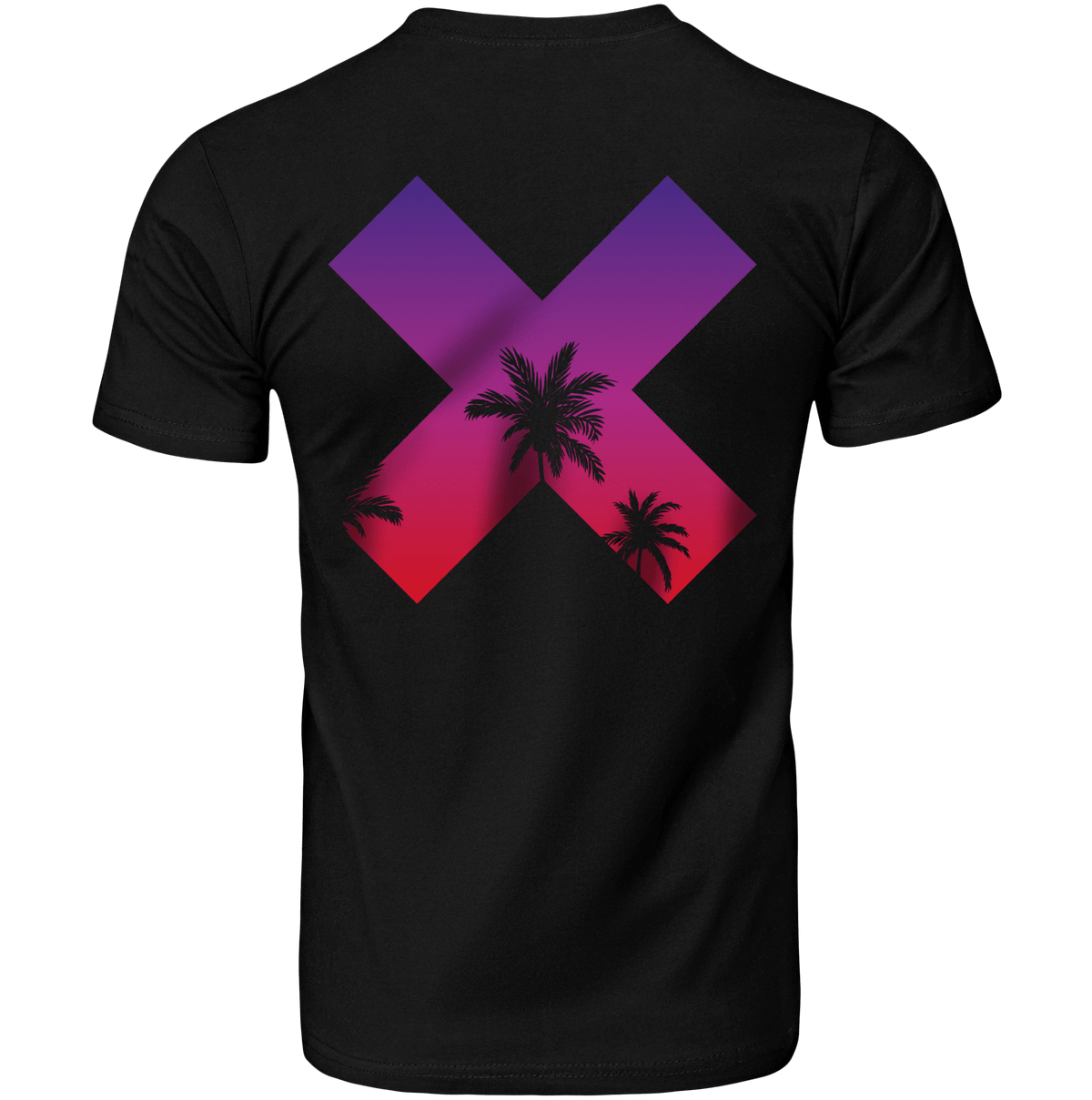
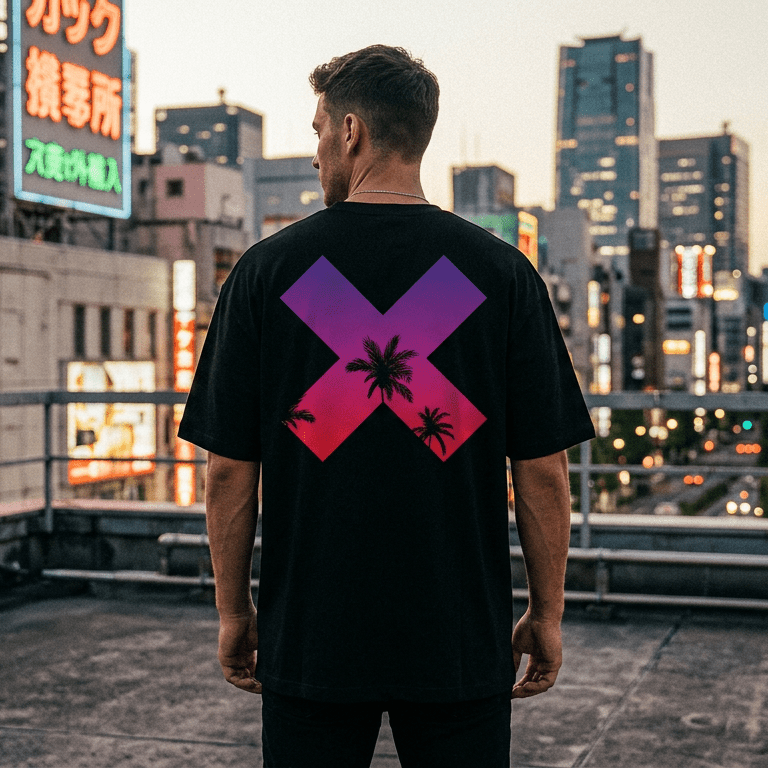
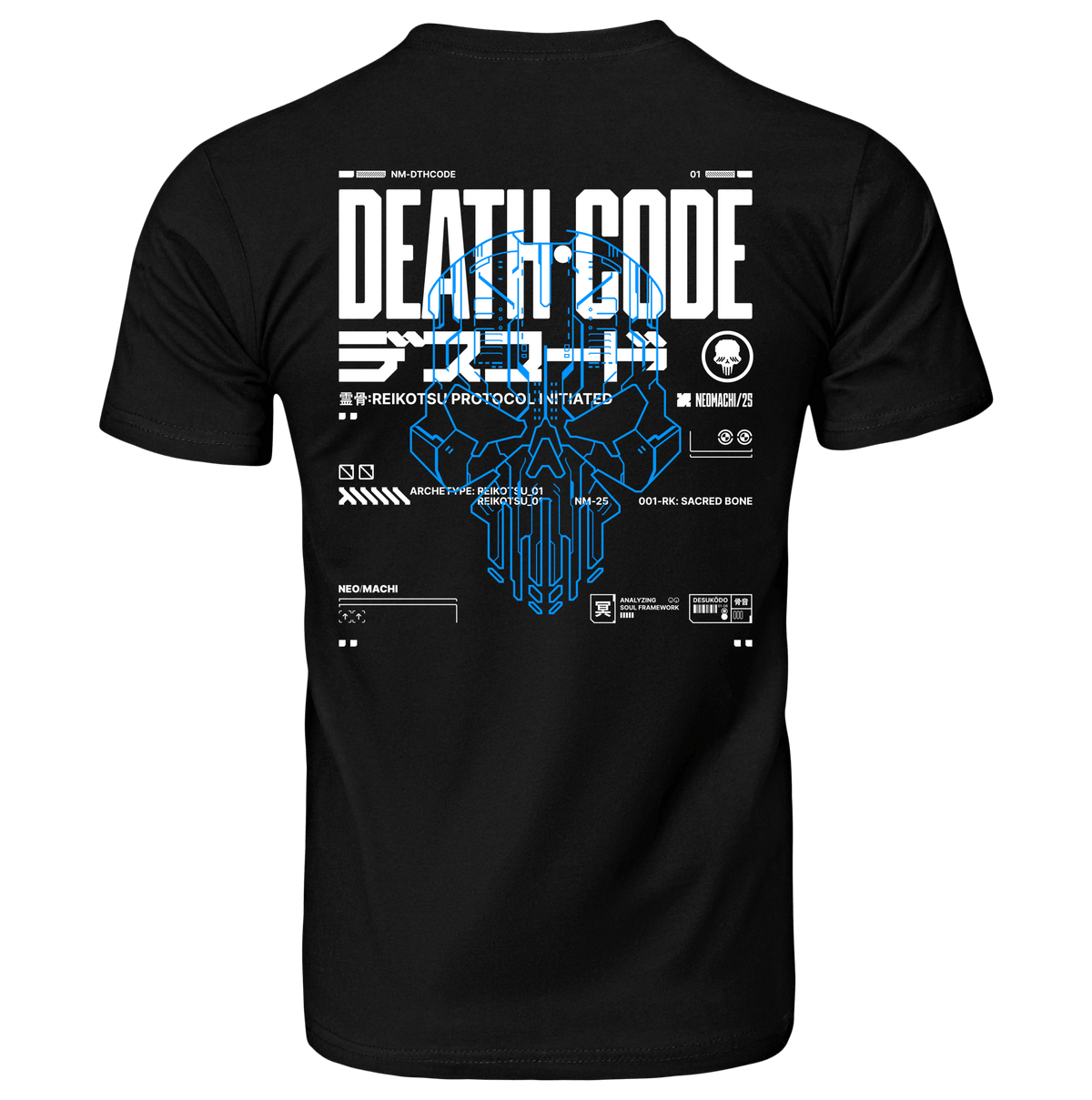
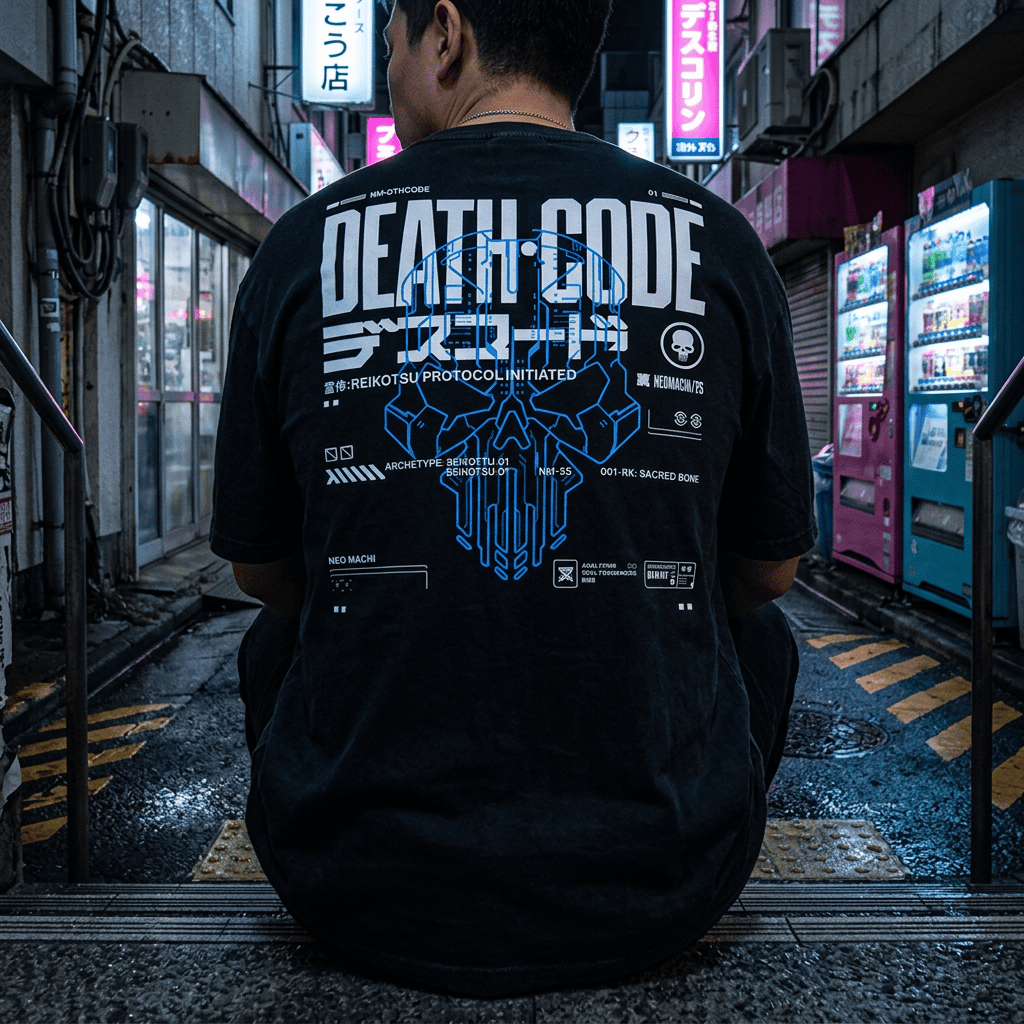
What it contributed: the palette. Reds and ambers against deep blue-black, wet asphalt reflecting everything. Also the single most-copied garment in the genre — a red jacket with a graphic on the back, which is why back prints remain the most desirable placement in cyberpunk clothing to this day.
Ghost in the Shell (1995)
Oshii's film is where cyberpunk got quiet. Long, near-silent sequences of a city existing — canals, market streets, rain — with the science fiction happening at the edges rather than the centre.
What it contributed: restraint, and the idea that the future is mostly ordinary. Its influence on clothing is subtler than Akira's: it is the reason the most credible cyberpunk outfits are mostly plain, dark and unremarkable with one strange element, rather than loud all over.
Serial Experiments Lain (1998)
Less a city and more a mood. Lain is about the internet as an environment you can be absorbed into, told through washed-out daylight, humming power lines and long silences.
What it contributed: the melancholy end of the palette. Sodium amber, muted greys, warm decay. It is the counterargument to neon-saturated cyberpunk, and the reason "dark and quiet with one warm accent" reads as authentically genre rather than as an absence of effort.
Cowboy Bebop (1998)
Not strictly cyberpunk — it borrows as much from noir and westerns — but it did more than almost anything else to make the genre's world feel lived in rather than designed.
What it contributed: the idea that characters in a science-fiction future wear ordinary clothes. Spike's suit is a suit. That principle is exactly the one behind wearing one hero piece and keeping everything else plain.
Ergo Proxy (2006)
Domed cities, industrial greys, a palette drained almost to monochrome. Ergo Proxy is the closest anime comes to darkwear as a visual philosophy.
What it contributed: proof that the genre survives without neon. Silhouette and texture carry the whole thing, which is the argument for the all-black, three-textures outfit.
Texhnolyze (2003)
Bleak, slow and largely underground, with a colour scheme built from concrete, rust and dim artificial light. Very little neon, enormous atmosphere.
What it contributed: the industrial register — hazard orange and concrete grey rather than cyan and magenta. It is the most wearable cyberpunk palette in daylight and the least used.
Psycho-Pass (2012)
A clean, bright, heavily surveilled future — cyberpunk with the grime removed and the control turned up.
What it contributed: the corporate-uniform strand of the aesthetic. Faction insignia, standardised outerwear, the idea that clothing marks which system you belong to. Every fictional-corporation graphic in cyberpunk clothing owes something to this idea.
Blade Runner: Black Lotus, Cyberpunk: Edgerunners and the modern wave
The recent productions are less about inventing the look and more about compressing it. Edgerunners in particular pushed the palette to its saturated extreme — maximum neon, maximum contrast — and did more to bring a new generation into cyberpunk fashion than anything since Akira.
What it contributed: a generation of people who wanted the clothes. If you started caring about this aesthetic in the last few years, this is probably why. Our guide to Cyberpunk: Edgerunners outfits breaks the show's look down into five outfits you can actually wear.
Older and stranger: Bubblegum Crisis, Armitage III, Battle Angel Alita
The late-80s and 90s OVA wave is where a lot of the specific detailing came from — the hard-edged mechanical design, the chunky boots, the layered jackets with visible hardware. Rougher than the classics and worth watching if you want to see the genre's vocabulary being assembled in real time.
What all of them share
Watch enough of these and the same three decisions turn up in every single one:
- A dark, low-saturation majority. Never less than about 80% of the frame.
- One dominant accent hue. Not three. Freeze any frame and count.
- Wet or glossy surfaces. Rain, glass, chrome — anything that turns one light source into twenty.
Those are the same three rules that make a cyberpunk outfit work rather than look like fancy dress. We broke the mechanics down in the cyberpunk colour palette.
Want to wear the look rather than just watch it? Read our anime streetwear guide for outfits that do not look like merch.
Frequently asked questions
What is the best cyberpunk anime to start with?
Akira for the visual foundation, Ghost in the Shell (1995) for the tone, Cyberpunk: Edgerunners if you want the modern saturated version first.
Why is cyberpunk so Japanese?
Because the foundational visual work was built on 1980s Tokyo — its signage density, neon, and technology layered onto older architecture. We go into it properly in why cyberpunk is so Japanese.
Is Cowboy Bebop cyberpunk?
Only partly. It borrows heavily from noir and the western, and its future is more worn-out than high-tech. It belongs in any list of the genre's influences regardless.
Where can I get clothing that looks like this?
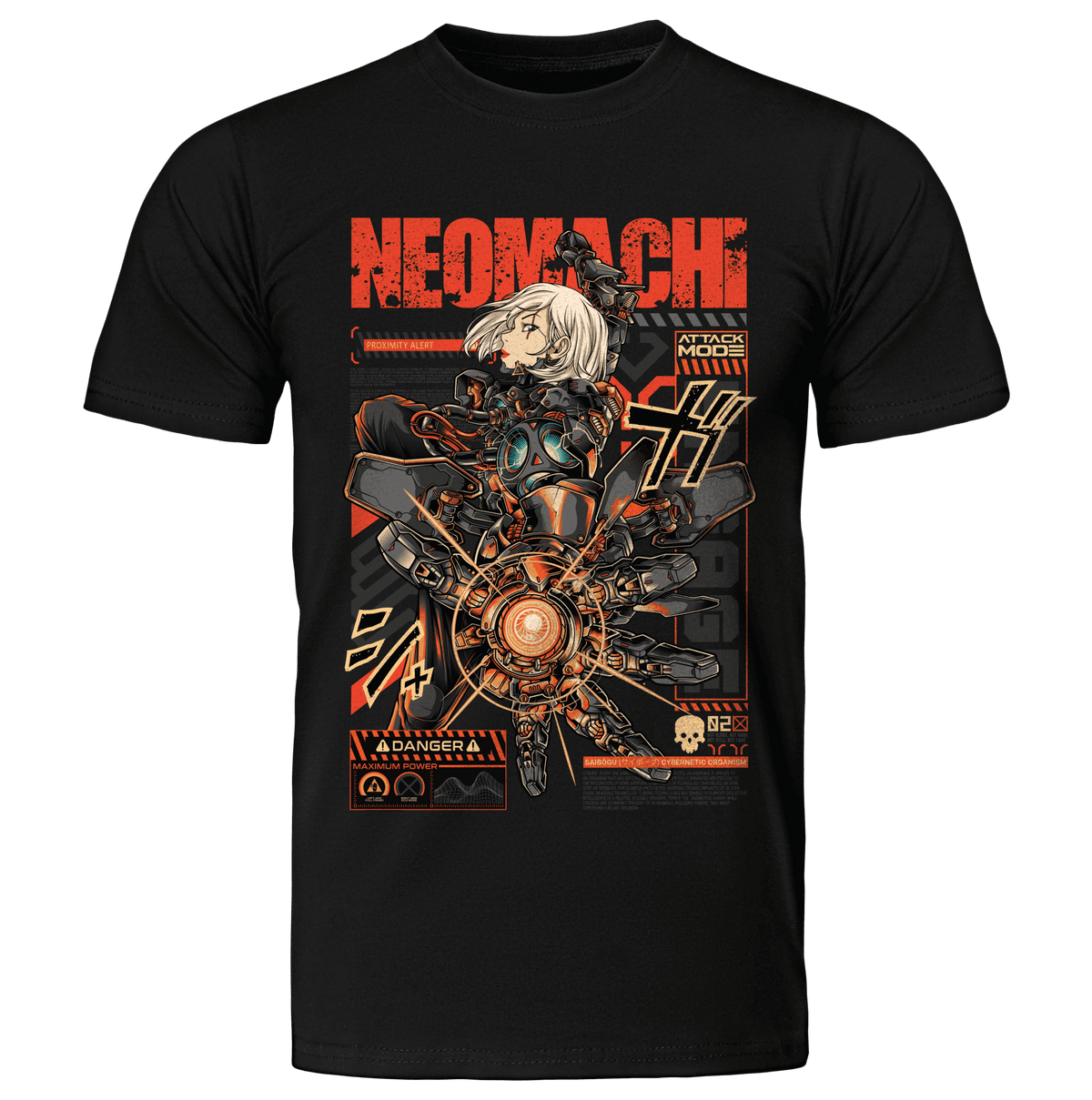
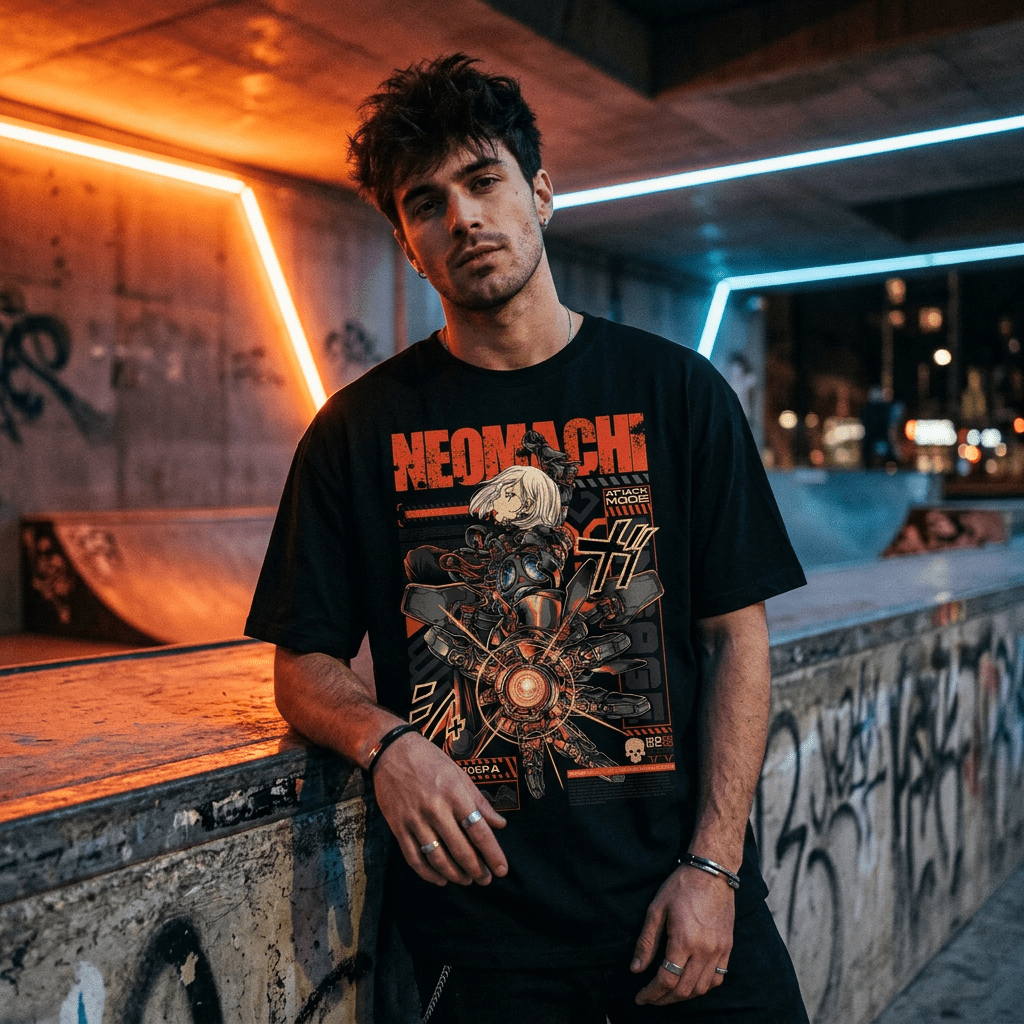
NEOMACHI has been designing in this space since 2020 — original artwork by real artists, printed in Europe, mostly organic cotton. Start with t-shirts or hoodies.
Wear the reference
Our designs come out of exactly this lineage — dark fields, disciplined accents, Japanese typography, fictional factions. Drawn by real artists, not generated.
Shop all cyberpunk clothing → | What is cyberpunk clothing? →